Showing posts with label Classics. Show all posts

Monday, February 1, 2016

Classics: Agnes Grey by Anne Brontë

When I read The Tenant of Wildfell Hall at the end of 2014 it became quite clear to me that even though Anne Brontë is often the least-remembered of the well-known literary family, she's a wonderful writer with important things to say. Agnes Grey, the first of her two novels, left me with the same opinion. While it certainly provides a hefty dose of social commentary, Agnes Grey was not nearly as controversial as Tenant and is the least dark out of all the Brontë novels I've read (which is all of them except Charlotte's Shirley and The Professor). That is not to say, however, that this novel does not touch on any emotional turmoil - it does, but it's not as intense.

This book depicts what life was like for governesses in the Victorian era. They had troubles within their work, they were in an awkward place on the social pyramid, and let's not forget the financial circumstances that led them to such work. It wasn't the easiest of situations to endure; it would have been no fun at all and my bigass mouth would have been fired. Agnes' employers were idiots; my jaw actually dropped at some of the illogical statements they were spewing. However... I have to admit there were some funny moments to read about while they would have been nightmarish to live. Some of the children she had to work with made the novel feel like a Victorian-era Supernanny episode full of screaming and  unruliness, although there were some downright disturbing moments of animal cruelty that were certainly not amusing in any sense. It seems Anne was not only advocating to improve human circumstances - she also deeply cared for animals. I like how Agnes is able to accurately judge a man's character based on how he treats nonhumans, from birds to dogs.

As Agnes was trying to teach teenagers, she didn't have to deal with such unruliness, but she had to deal with other forms of BS nonetheless. I always say that the Brontë sisters are good at making me feel feelings, and I must say I felt Agnes' loneliness in these parts. I felt her love for Mr. Weston... Funny how a book written about a hundred and fifty years ago can depict a  heavy crush better than most contemporary work. Her relationship with Mr. Weston warmed my heart despite there only being brief moments with him.

In a way, Agnes Grey is the most Austen-like out of all the Brontë novels I've encountered as it is not so controversial and crazy, but of course, it is mixed with the wilder style of Brontë writing, so full of emotions and more critical statements made of society. In fact, I'd recommend this to anyone who is a beginner in the world of Victorian literature as the plot moves along more quickly than other books of this era, plus it's somewhat short.

Of course, Anne is more of a realist than any of the Brontë family members while her sisters romanticized their stories, but she is not without charms by any means. Her stories are enjoyable, no matter how large- or small-scale the plot. I love that she's always making a statement in both Agnes Grey and The Tenant of Wildfell Hall: In Agnes Grey, she makes a firm statement that never really caused drama, but in The Tenant of Wildfell Hall she scared the Victorians out of their wits. Her purposes for writing are clear, and her execution is always on-point, like that of her siblings. I read in the appendix that accompanies all of Anne's work (which was written by her older sister Charlotte after her death) that Anne was apparently profoundly affected by the wrongs she saw in her life, and hence she wrote about them. She dared to say things even Charlotte was afraid to say... for that alone, she will always have my respect.

Tuesday, April 28, 2015

Classics: To the Lighthouse by Virginia Woolf

My first encounter with Virginia Woolf's work was in the form excerpts in a university textbook from A Room of One's Own. I decided quite quickly that this woman was worth my time, shelved The Waves as to-read on Goodreads, and became excited to discover that I'd have to read To the Lighthouse for a later class. I figured it would be good; I at least knew the writing would be lovely. But I really didn't know what to expect overall.
To the Lighthouse is a complicated novel. Woolf's stream-of-conscious style takes readers into the heads of several different characters without warning to help us understand their perspectives. Most notably, there is Mrs. Ramsay, a conservative mother deeply attached to her children who everyone seems to admire; her husband, a scholar obsessed over whether or not his work will remain relevant; James, their youngest child who loathes his father; and Lily, a painter who spends time with the family. Lily is so unlike Mrs. Ramsay as she has no plans to marry and struggles to understand Mrs. Ramsay's allure, and all the while, Mr. and Mrs. Ramsay's different parenting styles leave a remarkable impact on their children.
I will admit that I struggled with the stream-of-consciousness at first. It's not that I didn't know which character's head I was in; I thought the most difficult part was trying to figure out who was being thought of. It didn't take me too long to realize that this is part of what made To the Lighthouse special: I don't think Woolf would have been able to do what she set out to accomplish in a different style.
It's easy to feel when reading this book. There are so many moments of tension where no one is saying much but the characters are thinking a lot, and then there are other moments of utter sadness. I felt horrible for the children of this novel as Mr. Ramsay was a poisonous person to be around, and in turn, there were moments I felt horrible for Mr. Ramsay too. Every time I read a novel that deals with family relations, I wonder why it isn't a more common theme in books... It's so powerful. 
In addition to perspective, time is a key element in this story, and along with it, the inevitability that nothing and no one will last forever. It can be a difficult concept to grapple with, but I didn't find this theme depressing. A family far from perfect to begin with has to deal with one another, even if full of hatred or mixed emotions, and they have to deal with death. The same goes for their friends. Lily and Carmichael both have revelations sparked by this tumultuous and intriguing family, and I can't quite put my finger on it, but I could relate to Lily's emotional realizations at the end about Mrs. Ramsay. It was one of the moments that ripped at my heart.
But as I said before, To the Lighthouse didn't leave me depressed. Just in a strange sort of awe. I don't think I expected it to be quite so powerful and I don't think I expected to relate to it based on a short description I read of it... It's a really beautiful book. I loved it, and I'm definitely planning on reading some more of Woolf's work. 

Friday, January 9, 2015

Classics: The Tenant of Wildfell Hall by Anne Brontë

*While this book is about 150 years old, I may have revealed a little too much for some people's tastes. However, nothing I revealed is more than what I found through online synopses before reading it. Read at your own risk.

The names of both Charlotte and Emily Bronte have their names carved deeply into the stone of literary history, but their sister Anne isn't known quite so widely. There's a reason or two for this if you do some Googling, but Anne certainly is not less well-known because her work isn't good - it is. And it's important. In fact, she caused quite a bit of drama with her novel The Tenant of Wildfell Hall because it's so utterly feminist. The world may not have been ready for such a bold statement when it was first released, but now we can all undoubtedly and unabashedly look at Anne with unquestionable admiration and still be considered normal and not improper.

The new tenant of Wildfell Hall, Helen Graham, is sparking a lot of curiosity among the neighborhood. Everyone knows that she's a widow and clings to her only son as though she wouldn't trust anyone but herself to be with him... But neighbors talk. They form theories. And they know that there's something off about this newcomer. Gilbert Markham cannot bear to think anything wrong with her, for his affections for her only increase with time and she seems like a lovely woman. But there is a deeper story behind her, one that would be frowned upon.

It would be a spoiler long ago to mention this, but knowing this fact is the reason why people read The Tenant of Wildfell Hall today: Helen left her husband because he was a horrible excuse for a human being. That wasn't something people did in the nineteenth century, and when they did, they were social outcasts. Anne Bronte, however, found it reasonable, and she made it evident in this novel.

All the while, it's interesting. The Bronte sisters have a way of appealing to my heart, and this novel is no exception. Gilbert's love for Helen just overflows, and Helen's attempts to push him away (even though she obviously loves him) spark impatience and anxiety. Furthermore, I loved seeing how much Helen cared for her child's well-being. Her son was at times all the happiness she had, and I don't think I've ever read about someone so maternal (not to mention forgiving and religious) before. Even now, I'm sure there are women who can relate to her. And of course, there's Huntington, who had me feeling quite the opposite: He's such a plague. Just when you think he can't get worse, he does. I don't think he could've possibly wronged Helen any more.

But The Tenant of Wildfell Hall is not perfect, there are some aspects that seem a little drawn out and improbable (particularly the ending with poor Gilbert's trials and journeys), but I really enjoyed it. Considering its general message, it's hard not to, but as I said, Anne knew what she was doing. She told a story and expressed a social view, and she did both well. It's definitely still relevant... Even today, there are still women who marry or stay with men who are as underserving as Huntington... I hope they all read this book and figure out what to do. And I hope they find a Gilbert Markham someday.

Wednesday, July 30, 2014

Classics: Villette by Charlotte Brontë

Oh, how I loved Charlotte Brontë after reading her infamous classic Jane Eyre! Now I have finally read another of her novels, Villette, and do I love her just as much? No. I actually think I love her more, if that's even possible.
 
After living with her godmother for some time, Lucy Snowe must leave and find work. Her limited amount of options eventually leads her to a school in a French town called Villette, where she will pick up a job as a teacher and reside there for the years to come. Lucy must overcome countless obstacles, the most overwhelming being loneliness and the hurt and jealousy caused by unrequited love. At times Villette is a very dreary ride, but Lucy's strength and feminism makes it as empowering as it is.
 
Even now, the premise and outcome of this story are so groundbreaking and realistic; it's unlike anything I've ever read, and in essence, perfect. If I'm saying this in the twenty first century, I can't begin to imagine what it would've been like to read this when it first came out in 1853. Brontë had a lot of ambition. And these characters are just so vivid! M. Paul Emanuel is certainly a fascinating specimen, and I loved watching his character develop over time. Even when he became more likeable, he was still so spazzy and imperfect; I loved it. But no one could ever steal our heroine's thunder. It's just as easy to admire Lucy as it is to sympathize with her because she's so honest about her struggles. She doesn't pretend to be stronger than she is, and that in turn makes her stronger to some degree.

Lucy is also a very religious woman and is in the minority as a Protestant at the school she teaches English at. Villette is full of Lucy's criticism toward religious hypocrisy, especially what she found in Catholicism. This story also has a bit of a mysterious paranormal element, for the school is haunted by the apparition of a nun. This both intrigued and amused me because even though seeing seemingly random apparitions would scare just about anybody, I sometimes wonder if Lucy was simply afraid because it was a nun, or as she put it - the NUN.

While the ending left me rereading the last couple pages in disbelief, I realize that Villette is not a sob story. It's a story that centers around someone who searches for independence and finds it. It pains me, however, to see what life was like for women in the mid 1800s. Lucy Snowe shows us that being a feminist in this period makes it all the more difficult; I can't fathom how Charlotte must've been feeling when she wrote this. It must've been deep and inspiring, and where would we be if she didn't put pen to paper?

Anyone in need of a unique piece of literature must pick up Villette to quench the thirst. I must admit though that reading Villette wasn't always the easiest venture. The first half of the novel is a bit of a slower read in some spots, but the second half is quite exciting and emotional. Toward the end, my heart lit up as it did when I read Jane Eyre; Charlotte Brontë has a profound way of dropping a match on my heart with her stories. Between all the FEELINGS and her sense of feminism, I will love her forever. None can even think of touching the top of her pedestal.

Sunday, May 18, 2014

Classics: Pride and Prejudice by Jane Austen

In a time period where women were financially screwed over, ladies had to hope to marry a rich man in order to attain any sense of security. This unfortunate circumstance led many to only consider wealth when finding a husband, but Elizabeth Bennett will have no part in that; she wants to marry for love. All the while, her mother is trying to shove Elizabeth and her sisters into the arms of rich men and embarrasses the family with her obvious, ill-mannered attempts. But that doesn't stop Mr. Darcy, one of the wealthiest men around, from gaining affection for Elizabeth. But Elizabeth doesn't love him... Not yet anyway.

Jane Austen's Pride and Prejudice is like the godmother of classic novels. It's the classic story that just about everyone who likes to read praises unabashedly. Unfortunately, I deviated from this standard. That's right - I wasn't crazy about Pride and Prejudice - for your own sake, do not throw rotten food at your computer screen right now amid your intense frustration. But I honestly wanted to love this book like everyone else does; I imagine all the praise I've heard about it made me set the bar ridiculously high. Hence, this has to be one of my biggest book disappointments... perhaps THE biggest book disappointment in my reading life thus far.
I can pinpoint exactly why I didn't like this novel as much as I wanted to: The lightheartedness. It's been said that Charlotte Bronte wasn't fond of Jane Austen because she found her work dispassionate; I knew that much going into this read. Usually, when I hear criticism of books, by the time I'm finished I'll think something along the lines of "Oh, I see where they got that from, but it didn't bother me." But in this case, I completely agree with Bronte, and consequently, this lighthearted love story continuously made me think of Jane Eyre (which is one of my favorite books of all time) and compare the two. Jane Eyre is such an incredibly emotional novel; Jane and Rochester's relationship was so vivid and real to me, which is one of several reasons why I loved that novel so much... This wasn't the case for Darcy and Elizabeth. They hardly had a relationship in my eyes, and they barely made it known to the other how they really felt. Even when Rochester was set to marry another, I could tell that he was partial to Jane, but in Pride and Prejudice, actual declarations of love just seemed so passive and unfeeling. Emotion is what drives me as both a reader and a writer, so I couldn't get into this. I couldn't feel.

The lightheartedness of Pride and Prejudice could be seen as an asset in other areas, for it's quite humorous. Elizabeth's mother is absolutely mental; sometimes I laughed as I read her melodramatic dialogue. Mr. Collins, Lydia, and Mary were also quite whimsical - especially when contrasted with Mr. Bennett (I found him to be one of the most normal characters). These characters made me smile, I'll admit that, and Charlotte absolutely frustrated me, as I imagine Lizzy was frustrated... It's just not enough for me. I wanted more than a smile or two here and there.

I really don't have anything else to say about it, and that makes me sad. Pride and Prejudice is told in such a proper manner that I couldn't connect with it at all. I wanted to love Mr. Darcy, I wanted to admire Elizabeth... But I couldn't. Because I didn't feel anything.

Monday, April 28, 2014

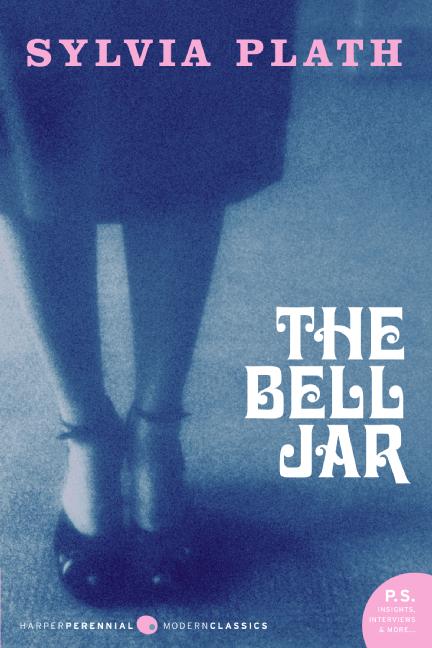
Classics: The Bell Jar by Sylvia Plath

Sylvia Plath's only novel, The Bell Jar, is a generally bleak piece of fiction in itself, but knowing that this book is partially an autobiographical account of Plath's struggles and knowing what happened to her in the end just makes it all the more depressing. Plath incorporates pieces of herself in the form of Esther Greenwood, an intern at a fashion magazine. She falls into a deep state of depression, and as she's numb in the present and oftentimes thinking of the past, she seems to be losing her mind. But of course, when readers encounter this book today, we consider all of Plath's ties to the scenario, and as much as we want Esther Greenwood to be okay, we also want Sylvia to be okay... But she wasn't.
 
The Bell Jar itself is a very emotional novel, but like I said, knowing Plath's history makes it even more depressing. It's just harder to take in knowing that someone was really feeling like this, that someone was that desperate to die. While it's easy to feel sympathetic for Esther Greenwood/Sylvia Plath, it isn't so easy (for me) to relate to the situation, but I feel like if I could relate, it would've been a very long, overwhelming read (despite the book itself is small) because it's so honest. It reveals so much in such a natural style.

Esther tells us about quite a few experiences she's had, between the death of her father, her time in New York at a fashion magazine, and her relationship with Buddy Willard. They all add up; the memories weigh heavily on her mind. Her grip on reality loosens gradually, for she begins this tumult of severe depression and anxiety by withdrawing bit by bit. We also get to read about her experiences with electroshock therapy, and how that first time made her frightened of any treatment of the sort for a while. I've never read anything of the sort before.

But what I believe this novel seems to do best is capture readers with flowy, basically perfect writing. Plath's prose is gorgeous; The Bell Jar is incredibly well-written. I could tell that much just by reading the first half of the first page. There are so many beautiful (and sad) quotes within that I kept going back to reread them and absorb them once again. I also really loved the poem featured at the end, "Mad Girl's Love Song." Plath is just such a talented writer; The Bell Jar may be her only novel, but I am definitely going to read all her poetry.

Plath's beautiful prose is half the allure of The Bell Jar. She just has ways of saying things that just sound so perfectly fitting. But unfortunately, the other half of the allure is seeing a glimpse of how she was really feeling. It isn't a happy read. It's gloomy and devastating, but it's honest, and it stays in one's thoughts after finishing.

Monday, August 5, 2013

Classics: Wuthering Heights by Emily Brontë

Initially, I didn't have much desire to read Wuthering Heights, simply because I'd heard some conflicting things about it that made me believe it wasn't for me. But when I fell in love with Charlotte Brontë's Jane Eyre, I decided I must try to read everything by her and her sisters in hopes of finding more beloved favorites. Now, having finished the book, I'm recalling all those things about Wuthering Heights I kept hearing (mainly discussions of the character Heathcliff) before finally reading it. I don't know if I can agree with anything I've heard, except for the strangeness of Catherine and Heathcliff's relationship, how it created such mass chaos, and how both characters seemed so flawed.

In the beginning of the novel, I liked Heathcliff; I felt sorry for him, a gypsy orphan whose adopted family would never really love or care about him, except Catherine. That was where my internal conflict with this novel began - Cathy. I didn't like her. I found her spoiled and ridiculous, and I didn't understand fully why Heathcliff could love her. Cathy's general personality aside, it must be because she loved him even though her whole family seemed to truly loathe him. Of course, if the two were to marry, Cathy's family would never approve, causing her to break her own heart. Did she ever realize that by betraying herself, a miserable domino effect would take place upon those around her?

It was at that point that I had to take a break from reading this book. I couldn't pity Cathy for her self-destruction, and I couldn't pity Heathcliff for loving someone so irritating. I needed time to figure out how to empathize with these characters, for that was my only chance at seeing the tragedy at hand as a tragedy. While I still can't say I'm a fan of Catherine, I've come to accept her, to feel sorry for what happened to her and those around her. Her choices were a form of self-destruction, but her self-destruction was tragic. It was easier for me to see this as I continued to read about how wretched Heathcliff had become as well as how her daughter of the same name was affected later on.

I must say, I liked Catherine's daughter better than her even though I could certainly see how they were related. I can say the same about Heathcliff and his son. Still, I felt sorry for both sets of people all the same. This love story is a mess; it seems as if no one wins. The abused can become abusers, a refuge can become a prison, the dead can haunt someone's heart until the end. Only Catherine's daughter can find happiness in the end, when those who have shaped her life so profoundly are gone.

One element I ended up really enjoying in this novel include Mr. Lockwood's perspective, especially at the very end of the book. Having an outsider look at this story made it all the more haunting for me; I kept rereading the last two pages. But, another element, the paranormal additives, also helped enforce this. Emily Brontë really knew how to craft a gothic tale filled with drama and dread; it was inevitable that I'd come around.

But it's strange; I don't exactly know where Wuthering Heights stands with me. When I rated it on Goodreads, I wasn't sure to give it four stars or five, especially when at some point while I was reading, I thought I'd give it three. In the end, I gave it four, but the more I think about it, the more I want to give it five. I don't know if it's because I had issues with Cathy so much at some point, or if it's just simply because while I can't necessarily say it's a favorite of mine, I can't really say that it isn't either. But it is without a doubt a very special piece of fiction, and it has put an odd feeling in my heart... I'm not really sure what it is, but somehow, I think it's what Lockwood must've been feeling when he saw the gravestones.

Saturday, June 8, 2013

Classics: Of Mice and Men by John Steinbeck

Of Mice and Men is one of the tiniest books high school students may encounter during their journey through required reading, but quite a bit of meaning is crammed into those one hundred pages.

Protagonist George travels with a man named Lennie, who is mentally handicapped, as they look for work during the Great Depression. Though Lennie always means well, his disabilities often cause them to pack up and leave their jobs behind, for Lennie doesn't understand exactly how strong he is, nor does he understand how some of his actions could frighten others. But this time, George and Lennie hope to maintain their job long enough to get the money to have their own place, to fulfill the American Dream that no one else seems to be able to achieve. Unfortunately, between their initial circumstances and their new job, things may not go as planned.

While I read Of Mice and Men, I just had that awkward feeling in my gut that something was going to go horribly wrong. At every page turn, my conscience seemed to say "Wait for it... wait for it...!" And even though this book isn't very long, feeling that negative buildup put a damper on the reading experience. John Steinbeck basically gives away the theme immediately with the opening quote, leaving readers with the worst type of drawn-out dread.

The characters don't help in this department either. George was so harsh toward Lennie sometimes; it made me sad. But even the rest of the people on the ranch help set a melancholy mood, whether with general negativity or general hopelessness, which probably captures the Great Depression quite well.

So, John Steinbeck forces emotion upon readers (I even teared up at the end), accurately depicts a time period, and enforced a theme quite well. Surely nothing could be wrong with this book... And really, nothing is wrong with it. The only complaint I have concerning this novel is that it could've been beefed up and made more complex, and did I have to have the sense of impending doom the entire time? I can't help but wonder how this book could've been better. Of Mice and Men has so many good elements, especially in terms of meaning, and I wish that this book was written in a different way so that these positives could shine brighter.

Consequently, I'm not the biggest fan of this classic. Sure, I liked it in a general sense, but I think it could've been better if John Steinbeck expanded the plot a bit and made it more intricate. But no matter what, I feel that the dreadful sense that something wasn't going to end well would've been there no matter how much the plot was expanded.

As I summarize my thoughts, I suppose it's safe that in a nutshell, this book just wasn't my type, because even though I'm not crazy about this book, I didn't exactly dislike it, either. I'm torn; my feelings are so mixed between the content, the way everything was executed, why it was good, and personal preference.

In the end, I gave it 3/5 stars on Goodreads, and somehow I think that rating sums up my feelings towards Of Mice and Men.

Thursday, May 2, 2013

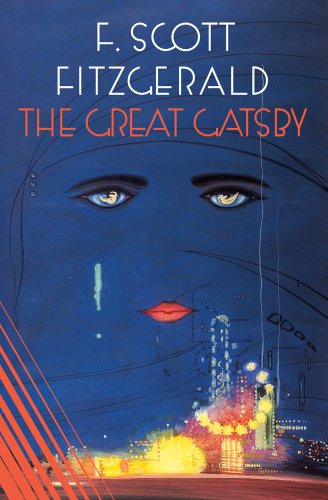
Classics: The Great Gatsby by F. Scott Fitzgerald

Need some classic American literature that'll keep the pages briskly turning? Anyone who hasn't already should pick up F. Scott Fitzgerald's The Great Gatsby, a story told through the eyes of Nick Carraway about his rich and mysterious neighbor, Jay Gatsby.

Gatsby has elaborate parties that just about everybody attends, but no one seems to really know anything about him. There are so many rumors about him, and after being invited to one of the infamous parties, Nick Carraway may be able to find out what's real; how Gatsby became such a wealthy icon, who he did it for, and how he sleekly plans to take her heart back.

But before I read The Great Gatsby, I wasn't aware that this story would be so full of this drama and emotion, for each corner of the Internet seemed to describe it in three words: the American dream. This description is vague, misleading, and kind of cheesy. Whenever I think of the concept of the American dream, I think of The Grapes of Wrath... The Great Gatsby is nothing like I initially expected based on such a dull description. Is there an American dream theme still present? Yes, but it's demonstrated in the busy city life with snooty rich people surrounding poor Nick. When I think of this novel, I don't really think about the American dream concept so much. I think of Gatsby himself, and I think of Daisy and their nearly hopeless situation. I think of the climax that was bound to happen, but I never expected it to be so severe and intricate.

Although this novel is (obviously) centered around Gatsby and his story, I certainly don't think Nick is a dead-beat vessel that just tells us what's going on. Sure, he was kind of an average guy, the sane man amid the craziness that cast a shadow on everyone else, but he wasn't boring or not relatable. I liked him; I connected with him when he talked about the hustle of city life and how one may seem lonely even though he/she is surrounded by people. And really, telling Gatsby's story through Nick was probably the best, most realistic way to do it, because the average person will only hear about men like Gatsby or witness men like Gatsby, but never actually be Gatsby. We're all mostly like Nick, observers of inevitable chaos.

However, I'm not saying that Gatsby's situation isn't relatable, because it is. That's part of the point. Gatsby, like many people, clings to the past and longs to return to the time when he was happiest even though he can never go back. But I've never heard anyone try as hard as Gatsby did to get it back.

And symbolism, symbolism everywhere! The eyes of Dr. T.J. Eckleberg, the green light, Gatsby's beautiful shirts, knowing everyone and no one... It all captivated me. Plus, it was all written in a beautiful way. Don't get me wrong, Fitzgerald isn't a perfect writer; he has some flaws. The biggest issue was the insufficient amount of commas, which I normally wouldn't forgive, but Fitzgerald has a way of making everything sound so pretty.

From what I've seen in the trailers, The Great Gatsby's new film adaptation looks like it'll be just as pretty as Fitzgerald's writing. Everything about screams 'CLASSINESS AND EMOTION,' so I will definitely go see it. (Besides, the music for this film is supposed to be amazing; that's always a plus!)

That being said, I definitely recommend anyone who hasn't read the book to read it before seeing the movie. It doesn't matter how much someone likes/dislikes classic literature to appreciate this novel; it feels ahead of its time in terms of active entertainment value. There's something in it for everybody, and basically all of it made me happy.

Saturday, April 20, 2013

Classics: The Adventures of Huckleberry Finn by Mark Twain

I don't think I've ever heard a negative word directed at Mark Twain's The Adventures of Huckleberry Finn, and quite frankly, I can't find anything negative to say about it either. There's nothing really wrong with it. It entertains readers with comical, lighthearted moments, but by the time one finishes the book, Huck Finn's adventures of fleeing his hometown with Jim, a runaway slave, are bound to leave a meaningful impact on the reader.

Sure, I'll admit, the writing style could be a bit tricky to understand due to Twain's ability to accurately scribe what the English dialect sounded like at the time, but it puts a clear picture into one's head. The type of writing of a novel has a huge impact on how emotion is thrust upon the reader, and the innocent, real-life approach to Huck's story helped get any emotions across in just the right manner.

I mean, how can someone not feel anything when reading this coming-of-age novel that demonstrates the wretched racism of the time? As Huck and Jim travel, Huck has to figure out what kind of person he is and what he really believes in, even if it does go against the status quo of that time period. His inevitable realization that he didn't care if he was going to hell, that he couldn't betray Jim and give into the corrupted laws of humanity... That was the best part of it for me. I shed a tear or two. Jim and Huck's father-son relationship really tugged at my heart strings from time to time.

Apart from their relationship, I just felt so sad for Jim.

But don't get the idea that this book will cause emotional turmoil, because as I previously mentioned, there are comical moments, oftentimes with Tom Sawyer. However, Tom drove me crazy with his need to make everything a complicated adventure, but everything that annoyed me made him a more interesting character. Still, I did like Huck, and couldn't help but feel sympathetic for his negative situation with his father and proud of him for listening to his conscience instead of the status quo. That, my friends, was the point of Huckleberry Finn's adventures, and it is indeed a good point.

Although I have nothing but nice things to say about The Adventures of Huckleberry Finn and genuinely enjoyed it, I cannot necessarily say it is one of my favorites, primarily because I would've liked less time with the Duke and the King. But, it's an important piece of literature that's bound to work its way into any heart; anyone who reads it is bound to appreciate it.

Monday, January 21, 2013

Classics: The Scarlet Letter by Nathaniel Hawthorne

In Puritan society, moral code is at a high standard. The guilt, shame, and even humiliation is bound to burden whoever dares to sin during this time period, whether it's their own conscience eating at their souls or the harsh stares of fellow community members. So when Hester Prynne is impregnated as a result of adultery, her punishment is to always wear a red "A" stitched onto all of her clothing. Anyone who sees her will be reminded of what she's done, and of course, Hester will also be reminded of her circumstance, which is a bit more complicated than it may initially seem.

Facing motherhood and the scorn of the town on her own, Hester must find a way to survive it all, to remain strong as she lives through her punishment.

The Scarlet Letter seems to have as many fans as haters, and it's easy to see why. On one hand, the writing is ramblesome and suffers from overly-detailed sections that include unneeded description and very little plot. The writing isn't typical of the time period it was actually scribed in (the 19th century, which is stylistically my favorite period in writing) since Hawthorne wanted to keep it more Puritan, and therefore more relevent to the storyline. But on the other hand, it's just a great story with well-defined characters (that didn't need an entire chapter each devoted to describing their individual personalities and other things related to them) and themes that made me think.

Despite the historical setting that may seen anything but normal, Nathaniel Hawthorne's The Scarlet Letter displays heroism in a more ordinary way with Hester Prynne's tale. One doesn't need to fight in physical battle to be considered a heroine or hero, but to just overcome some sort of obstacle, whether it happens overnight or it takes years. This is what first attracted me to the book as I began reading the first few chapters. Hester didn't want to be owned by sin or by the town's opinions. She wanted to be strong.

But her personality never stopped me from feeling sorry for her, because even though she held her head up in town, she often felt lonely and miserable. Her marraige should've never happened in the first place, she feared that her child would reflect unholy sin in her personality, and it was impossible to be with the father of her child without revealing his identity.

Mr. Dimmesdale also kept my interest and sympathy throughout this little novel, while Pearl's strangeness kept me smiling. Sure, she was unruly, but it was funny. She was the sunshine in The Scarlet Letter as a whole, much like she was the sunshine of Hester's life, which had unfortunately turned so bleak. That concept sums up this book quite well: Generally unhappy, but the little sparks of hope really stand out in contrast.

All things considered, The Scarlet Letter isn't exactly a favorite of mine, but I did like it; it tugged at my heart strings a little bit. It just could have been better if Hawthorne focused on plot development more than over-explaining. But, if he was more overly-descriptive of what these characters were feeling in an emotional time... Then, I'd have little to no room to complain.

Even so, it's really no wonder it's a classic.

Sunday, September 9, 2012

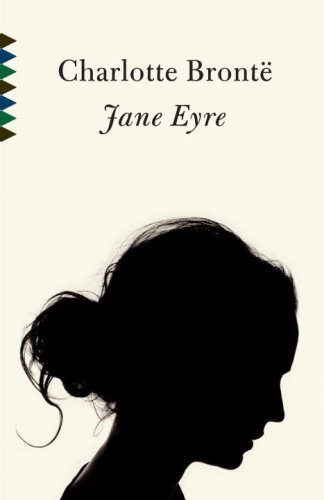
Classics: Jane Eyre by Charlotte Brontë

Note that this is not the cover of the
edition cited.
Orphaned at a young age, Jane Eyre's childhood with her aunt had been one of terrible mistreatment though she'd done nothing to deserve it. Later, she gained liberation by going to a badly-run school, but it is at the ripe age of eighteen where her life seems to really begin. Jane needed a change, and becoming a governess seemed to her a bright future.

Then she met Mr. Rochester, and life would never be the same.

Jane Eyre was a rather groundbreaking piece of work for the 1800s as it is such a feminist novel. Where would we be without women like Charlotte Brontë to blatantly state such equality? Even now, after all these years, it contains a particular uniqueness and holds a place in many a heart, including my own.

That being said, Jane Eyre is one of my favorite novels. Whilst reading it, I never wanted it to end. When I reached the last page, I felt a bit of a pang inside, for I could read about Jane and Mr. Rochester forever if Charlotte Brontë willed the story to last so long. For not only is this an interesting story, but Jane is relatable, and Mr. Rochester is quite passionate as well as different than most love interests.

Of course, Jane is admirable for her amount of feminism. She thought of her feelings (though she cared for others) and therefore said and did what she felt she needed to do in order to be happy. But even before she grew to be an independent young woman, she had still contained a unique spirit when she was younger still. As a child, Jane had been forced to hold in a lot of anger toward her aunt and cousins. Watching her finally release some of that felt refreshing, especially since I tend to think similarly to her when I am angry. She felt she didn't need to be nice to those who wronged her, unlike her friend from school, Helen, who is a very forgiving and peaceful young lady. Everyone should long to think as positively as Helen, to be as sure as themselves. Still, different as they were, both girls' characters leave a memorable, even admirable, impression.

Now, onto the subject of Mr. Rochester, the man Jane Eyre would come to love. Mr. Edward Rochester happens to be my favorite love interest, as his romanticism is most favorable and swoon-worthy. He's not an ordinary man; he has idiosyncrasies that almost strike as odd. But the best part about him? He's not perfect. Not even close. In fact, one thing I admire in this novel is this: Jane Eyre is a story that contains a love interest who is described as ugly. Thank God. It is probably strange to wish for an unattractive love interest, but let's face it: Not every girl is going to fall in love with/ be loved by the hottest guy one the planet. This fact has rarely even been depicted in love stories, and it takes away from a romantic connection when you hear the main character blab about her boyfriend's appearance. If a female is reading this right now and is becoming quite disappointed by such a statement: Wake up.

Besides, another thing I loved about his book is that it shows how someone's physical appearance may seem to change as you get to know a person. Are they still unfavorable in general appearance? Yes, but that shouldn't matter. Anyone who says it mattered to Jane is confused, for she loved Mr. Rochster purely as anyone could ever love. Jane has even told Mr. Rochester that he isn't handsome, but does anyone care? No. Mr. Rochester is handsome in my book because his character is handsome. Jane could certainly say the same.

Jane and Mr. Rochester's relationship frequently made my heart flutter and mouth smile, but if either was ever discontent, my heart sank. Of course, interesting twists concerning these two characters came along, and the way Jane deals with them makes her stand out as a female character. As previously mentioned, Jane did whatever she could in order to make herself happy, even if the costs were unfortunate.

One of my favorite quotes said by Jane: "Do you think, because I am poor, obscure, plain, and little, I am souless and harmless?" (Brontë, 2011, p.255) Any idea how many times I would like to say that?

Anyway, the ending of Jane's autobiography is a well-deserved happy one. I couldn't stop smiling, of course, until I reached the end of this beloved tale. Sometime soon I hope to reread this story, as it means so much to me.

Although the time to review such a classic like Jane Eyre is long gone, I will still give it 5/5 Stars. It is one of my favorite books containing a couple of my favorite characters, and it is unforgettable and enjoyable to say the least.


Brontë, Charlotte (2011) Jane Eyre. London: Harper Press

Tuesday, May 8, 2012

Classics: Dracula by Bram Stoker

As a fan of nearly all variations of vampires in fiction, I definitely wanted to read Bram Stoker's Dracula, which was the spark of it all. This novel has had a major impact on the world, even on those who do not dwell within the fictional realm. When people hear the name Dracula, they do not think of Vlad the Impaler. Instead, they think of this intriguing, dark vampire who's story has been alive for over a century.

When one of my friends got a copy of Dracula before me, she said that the writing was "too old-fashioned" and she gave up. I think I laughed a little on the inside due to her ridiculous complaint. Since I usually love older works due to their general style, I knew I'd love this book... But I didn't. Not because it is "old" or anything like that (if I had a problem with that sort of thing, I wouldn't have created a meme where I talk about classic novels), but because it was poorly written. Even for the time period it was wirtten in, it wasn't very good. Edgar Allan Poe's time came before Dracula (though within the same centruy) so Stoker had no excuse. Really, Bram Stoker seemed to set himself up by writing a novel full of diary entries and friendly letters, for they made the story so passive. Rarely did anything exciting ever happen in these entries, but when something did occur, it felt more like a distant dream, as if none of it was happening.

However, the very beginning was sort of interesting. I actually enjoyed hearing about Jonathon Harker's story at first because of the eerie events that took place, but that writing style just can't pull off an entire book. After a while, I just didn't care about Miss Lucy's letters and the headache became too sharp.

Fellow readers, I have a confession to make: I simply could not finish this book. The fact that I couldn't do it angered me, so I tried reading it again. Still, the second time proved no better than the first. For the second time, I gave up. Maybe someday I'll get around to reading the entire thing, but I highly doubt it. This book just didn't work for me.

Though I did not get an enjoyable reading experience from Dracula, I know that many did. I even wish I could have found some way to appreciate it; that's why I tried reading it again. After all, this story has had such an influence. People wouldn't think of vampires the same way without it, and they wouldn't have their favorite nightmarish tale. Obviously, this book is far from my favorite, but I know a lot of the movies and books I like probably wouldn't exist without it.

I don't have to cherish what I don't like, but I'll try to see the good in it, especially considering it's an unforgettable classic of its time.

Sunday, July 24, 2011

Classics: The Catcher in the Rye by J.D. Salinger

Classics is a little thing I started where I talk about classic novels (or older novels that have no need of being reviewed in this day and age). I do not necesarily review the books, just give my opinion and talk about why they're important, whether I enjoyed them or not.

The Catcher in the Rye by J.D. Salinger may be one of the most widely read and questioned classic novels ever written ever since its release in 1951, as it deals with teenage angst, depression, and sexuality. However, many see that there's not much that happens in this story when you look at it through a general perspective. It's a novel that you have to look deep into in order to understand it. For that reason, some people do not care much for this novel. Personally, it's one of my favorites. I love it.

Holden Caulfield, the strange yet wonderful main character, has flunked out of college again and is headed for home. The story is led by his string of thoughts about how "phony" so many people in the world are and the reader sees he is oftentimes overcome by depression. It seems that the only people he really does care for is children, for they aren't phony like most adults. He finds realizations in the midst, and feels sad for those fake people he can hate so easily.

With that, some may think that it's odd that I can relate to Holden. I felt like I could understand him and agree with him on certain terms in ways I've never been able to relate to any other character or person. Holden may have taken those similarities between us to extents that are more extreme than I reflect them, and because of those extreme feelings of his, he's someone that I easily felt sorry for right away. I was depressed when he felt depressed, and I felt sorry for him when he was sorry for everybody - even people he didn't like.

It's too bad that The Catcher in the Rye isn't always understood. That such a marvelous piece of work is often challenged and even banned. There's something so much deeper to it. But I guess not everyone can be quite so peculiar as Holden nor as strange as me. Maybe that's why this book is so special to me; it speaks to me in a way that no other story ever has and others simply don't understand. That connection has to be rare, right?

I cried a couple of times while reading The Catcher in the Rye since it moved me so. It was a lot of firsts for me, and the way I could relate to some of the elements of this book wasn't the only first for me either. Immediately after putting it down, I wanted to read it again. That's never happened to me before.

This book is something that I can't even talk about in a way that conveys how I feel.

5/5 Stars

Friday, March 11, 2011

Classics: Alas, Babylon by Pat Frank

Classics is a little thing I started where I talk about classic novels (or older novels that have no need of being reviewed in this day and age). I do not necesarily review the books, just give my opinion, and talk about why they're important, whether I enjoyed them or not.

Pat Frank's Alas, Babylon isn't necesarily a "classic" novel. It was first released in 1959, and had one small televised adaptation. It may not be To Kill a Mockingbird or a novel of many awards, but it has an effective focus: Nuclear war. Randy Bragg, the main character, amongst others in the small surviving Florida community located in Fort Repose, must find a way to survive in what seems to be their abandoned little world, without technology or working government. They must overcome sickness and hunger, as well as deal with the death that surrounds, for most of the United States and its allies were bombed.

I had to read Alas, Babylon by Pat Frank for school, and I doubt if I would have picked it up otherwise. War tends to be an interesting subject to read about when it has something to do with science fiction or fantasy-based, but realistic fiction can be sort of scary for me, a peace-person. I can only hope that something so tragic, so horrible, will not happen in reality.

Though I cannot relate to any of these particular characters, I have empathy for them. Randy feels the pressure of leadership, others don't know if their family or spouse is still live. Children are afraid, and boys are forced to be men in little time - like Ben Franklin, Randy's nephew. I felt almost... uncomfortable at the thought with a gun in his hand. He handled things in such a mature way, and adapted to the situation.

Of course, the theme of survival can be a page turner. It can also be slow, filled with waiting with small dilemmas in between. Food was a big part in this. What happens when it runs out? What are we smart enough to remember? How creative can we get? Foods that I didn't understand the value of ended up being so important to the characters. Pat Frank wrote with purpose, and he also wrote at a good pace. Sure, sometimes he jumped foreward a lot with the timeline, with gaps in between, but if he didn't do this (which can oftentimes seem randomized) the novel would have taken forever for me to get through. At times, it could seem a bit tedious, and I felt like problems were solved almost as soon as they were introduced.

The ending isn't ideal, and I've only read one other book with such a feel. The community manages their problems, yet the situation remains bleak to some degree, for not much is really solved. However, there is a lingering hope. And that's what this whole book is about. Humanity will adapt and continue, and hope is present in even the darkest hours of a nation.

Alas, Babylon had a lot going for it, and it had quality. In my opinion, it should have received more praise than it had when it was first released, although I'm not particularly crazy about it. It's a good book, I'll give it that. But it's not exactly one of my favorites.

3.5/5 Stars