Showing posts with label contemporary. Show all posts

Sunday, March 20, 2016

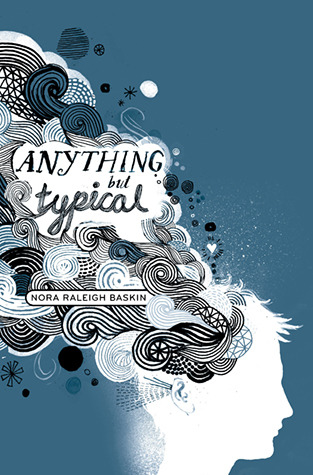
Anything But Typical | by: Nora Raleigh Baskin

Jason has autism. The world tends to overstimulate him and sometimes he can't control his movements. He doesn't say much, and that only seems to cause drama in a world that is constantly searching for a response. But that doesn't mean there's nothing in his head: Jason writes stories quite often, and he posts them to a website called Storyboard, where he meets a member named PhoenixBird. He thinks she might actually be his girlfriend... but in a world where even his mother struggles to understand him, how can he expect PhoenixBird to accept who he truly is? 

Anything But Typical is the second book I've read from someone on the autism spectrum's point of view (the first being Marcelo in the Real World by Francisco X. Stork, one of my favorite books of all time). Seeing the world through someone with this condition's perspective is of course intriguing and insightful, but simply as someone who enjoys writing and connecting with others through the Internet, I was immediately interested in this novel's premise. The idea itself is golden (as is this cover).

The execution? Not as much.

Don't get me wrong, Anything But Typical did not outright falter. I think Baskin did a pretty good job of showing readers what was going on in Jason's head as he interacts with the world and struggles to be the socially-superior person everyone wants him to be. I could feel his hopelessness and I often felt angry at how some of the adults around him would react - fictional adults who represent what happens all too often in real life. The teachers are not trained as well as they should be to work with him, his mother struggles to understand how her son can possibly feel anything when he is not very expressive, and his grandmother... Well, his grandmother doesn't understand much of anthing. I also thought it was good to see how Jason's stories reflect his views of himself in relation to the world around him, even if it does get borderline corny at some points.

However, the last quarter of the book just felt clunky, which is odd because I would have expected that issue to arise when Jason is flashing back to past times as the present story continues. But that element was done well enough. There is so much build up to the climax, but once we get there, it's a bit underwhelming and doesn't have a very good flow to it. Keep in mind I totally understand the need to have a 'realistic' ending that is not totally happy or totally miserable - I like that aspect of the book. (And really, that's what's accomplished in the book I mentioned earlier, Marcelo in the Real World.) But the pace was weird and one of the moments where he was daydreaming wasn't written in the clearest way.

Since I was so excited to read this book based on the premise, I have to say I'm a bit disappointed in how this one turned out. Genius idea, rocky execution. 

Thursday, February 25, 2016

Wonder | by: R.J. Palacio

People have been raving about R.J. Palacio's contemporary novel Wonder for a few years now. Sometimes it's categorized as young adult, but sometimes it's categorized as middle grade since the main character is in the fifth grade. It's enjoyed across either age group, and I'm sure even beyond because Wonder is a bit of a wonder.

August (Auggie) has a face that's very different than everyone else's. He's had correctional surgeries to improve upon his genetic misfortunes, but he's still what many would call "deformed." Since he's had so many complicated health issues between surgeries for most of his life, he's been home schooled - until now. He knows that fifth grade will be a struggle looking so different than everyone else, that not everyone will treat him well. But fortunately, he's in for some pleasant surprises amid some periods of strife.

It would be easy to anticipate Wonder being a little depressing, but as I said with Francisco X. Stork's Marcelo in the Real World, it ends up being quite lighthearted and serious all at once - hence, any age group will love it. Several moments made me smile, but quite a few had me damn near crying in public as I read. 

I became quite attached to the characters and plowed through the pages quickly, no matter who was narrating. I actually didn't expect multiple narrators at first; I just assumed that Wonder would only be Auggie's story. But Palacio shows us how he affected other people as well, including his protective older sister, his sister's boyfriend, and his friends. There are multiple sides to every story, everyone feels something different, and all these feelings seem so real and valid. Palacio didn't really make any of them perfect or evil - rather, she showed how complicated situations can be. Even though he only gets one section, I really loved the way Justin's section was written. It seems to show that there's moe than what meets the eye: At a quick glance, Justin apparently doesn't understand punctuation, but the words themselves are gorgeous.

As for the other characters? Of course, our protagonist Auggie is quite loveable and easy to sympathize with as he discovers the large spectrum of humanity in his fifth grade year. Summer always put a smile on my face as she consistently decides to choose her friendship with Auggie over all pressures, and Olivia is always sticking up for Auggie - oftentimes in rather blunt ways, which I found touching. These characters really care about one another; they warmed my heart.

I suppose that's Wonder in a nuthsell: Heartwarming. Sure, some moments will put a smile on readers' faces, others will spark sympathy, but altogether, I found this book rather touching. 

Wednesday, December 2, 2015

Hate List | by: Jennifer Brown

Valerie must go back to school, and she's dreading it. At the end of last school year, her boyfriend Nick killed himself and other students. Survivors deal with painful injuries both inside and out. All of the victims were on the "hate list" which he wrote with Valerie beforehand. Now that everyone knows that Valerie contributed to the list, people blame her, but she had no idea what Nick's true intentions were. He was the one person she thought understood her, but in the end he flipped her world upside down and left. Between all of that and problems at home, Valerie has a lot on her plate, and she doesn't know how to establish a sense of normalcy. 

Obviously Hate List has a lot going for it. That premise is intense, and honestly, when I read about the general gist I immediately thought that it would be too much. Too dramatic... Or maybe just trying to hard to be too dramatic. I was required to read this for a class, and I wouldn't have picked it up otherwise.

While it didn't exactly resonate with me, Hate List wasn't nearly as melodramatic as I expected. I was intrigued and emotionally invested in a moderate way, and I can say that I generally liked it. John Green talked about how we romanticize the dead's previous struggles in The Fault in Our Stars, and Jennifer Brown talks about how we romantice the living's grieving processes. Grief is ugly. And some ugly souls are unaltered even after tragedy. Nothing can completely suck the ugliness out of us, whether we want to admit it or not. Valerie realizes this when she goes back to school: Not much changed since the shooting. But some people did.

Brown seems to form her characters to be real people with a mix of good and bad qualities rather than being walking epitomes, and while that's always ideal, I think it's especially crucial for such a 'real' story. She also does an exceptional job of describing emotions. While no one I have ever known has shot anybody, I have been disappointed. I have missed people and felt disappointed in the at the same time, like Valerie feels about Nick - even though this book has a really extreme premise it has relatable moments. I got a few tears in my eyes off and on.

I guess there's nothing really bad about Hate List, but... I don't know. I guess I just wish the plot was stronger. The most intense moments were usually the flahsbacks, and what happens in the present is interesting, but I just feel like there could have been more... together? The execution of the overall story wasn't bad, the writing wasn't bad, the charactes were honest, there were some emotional, relatable moments... Even though I can say I enjoyed it there's something that keeps me from saying I REALLY liked it, and I'm not 100% sure what it is. Maybe despite everything it's just not my type of book?

Hate List has a lot of positive points, I'll give it that. But I just didn't love it even though I struggle to put my finger on why.

Saturday, November 7, 2015

Every Day | by: David Levithan

After hearing so many rave reviews of his work, I have finally read my first David Levithan novel, Every Day.

I was both intrigued by and weary of Every Day's premise when I first read it. It's about a soul named A who wakes up in a different body every day... interesting as that sounds I was worried A's situation might feel a little hopeless, and while it certainly seems that way for much of the story, I did not feel overwhelmed.  (The primary exception is when reading about Kelsea, the clinically depressed teenager A inhabits for a day.) Levithan leaves us in a cloud of uncertainty at the end but not without hope, and that seems to be the best note to end on for this type of book.

As A moves from body to body, life to life, Levithan examines a lot of different lifestyles and circumstances and demonstrates sympathy for a wide range of people. The examination of different types of people is actually one of the greatest strengths of this novel. Even though some of the personalities are arguably a little cliche, that does not mean that they don't exist, and I think his goal was to show extremes anyhow. Still, this story emphasizes how similar we are despite external differences. Once A finds his love interest Rhiannon, her inability to feel the same way about him as he switches bodies is both frustrating and understandable. We judge by appearance all the time, and I don't think we realize exactly how annoying this can be until we hear from a being who has no appearance.

The writing style is consistently gorgeous - Every Day is a book filled with great quotes to like on Goodreads. There are passages that perfectly sum up humanity's strange intolerance, and there are passages that describe love better than most literature I've read, because Levithan does not care if the truth sounds far-fetched and romanticized. It's reminiscent of T.S. Eliot's poem "The Love Song of J. Alfred Prufrock" - "Do I dare disturb the universe?" - a line that has always been spot on with me. Both positive and negative relationships are explored, and I think everyone understands either what it's like to be in Rhiannon's position in regards to Justin or what it's like to know someone special who insists on staying in shitty relationships.

Every Day is certainly an intriguing and memorable novel. I've never encountered anything quite like it before. It may fall a bit short of being a new favorite, but it got me thinking, and I'm pretty sure that was Levithan's goal with this book anyway.

Wednesday, September 30, 2015

Imperfect Birds | by: Anne Lamott

Imperfect Birds is the third book of Anne Lamott's contemporary Rosie Ferguson series, which I have not read with the exception of this latest installment. (It's one of those series you an jump in at any time.) I don't think I would have ever picked this up (or even knew it existed) if it wasn't required for one of my university classes which examines adolescent feelings and behavior even though Imperfect Birds is technically an adult book, for it tells the story of teenage Rosie as well as that of her parents while she spirals out of control. Rosie lies, steals, and takes drugs - and she is able to manipulate her mother Elizabeth for much of the ride. Elizabeth must confront some of her own emotional problems and find a way to stand up to her daughter before it's too late.

Imperfect Birds tries to tackle some big topics. Much like with any dramatic soap opera, it'll hold your attention whether you like it or not... The only problem is that it's just not very good. It's odd, really: Once in a while Lamott will have a line that I find exceptionally creative and truthful, but a number of my issues stemmed from the way it was written, the ways she chooses to tell the story. Much of the dialogue felt unrealistically descriptive, and once in a while she'd try to throw in teenage slang and it just didn't reflect how teens talk. It was awkward. (To provide a comparison, I think John Green replicates teen slang perfectly.) Plus, some descriptions in general were just awkward.

One thing I noticed right away is that there is no strategic reveal of character traits - we are told what each and every character is like from the get-go, leaving readers with little to figure out on our own and giving us a very slow start. (I feel like this would have been even more irritating if I read the previous books in the series.) The characters are not likable in any sense, but they aren't supposed to be. Unfortunately, though, it makes them easier to be frustrated with them than sympathetic - especially since I couldn't relate to much of any of them. They're all so troubled in their own ways, and as they mix and mingle they each become even more troubled. There's a lot of drama within these pages. But it also became apparent as I was reading that Lamott likes writing about little moments. This would be fine if it wasn't all she liked to write. Some of the biggest events of the plot that would surely contain a lot of drama are glossed over, skipped... I don't think I've ever read a book where this happened regularly.

The ending does not have the clearest of resolutions, which generally does not bother me as we are left with hopeful clues that Rosie will be okay with time. (Most of the time when books don't have clear resolutions we can figure it out or know enough to sort of formulate a couple different potential endings anyway.) However... this book just ended so abruptly. I don't mind it in terms of the resolution itself and wondering what may happen, but the exact placement just felt so off, like she would have at least needed a couple more paragraphs. It felt as though the story dropped off in the middle of a moment, but not in a strategic way at all.

Overall I just didn't feel like Imperfect Birds was very good. While it deals with some tough topics and there's enough overall drama to stay interested, the characters and the execution of the story just didn't win me over in the slightest.

Sunday, August 23, 2015

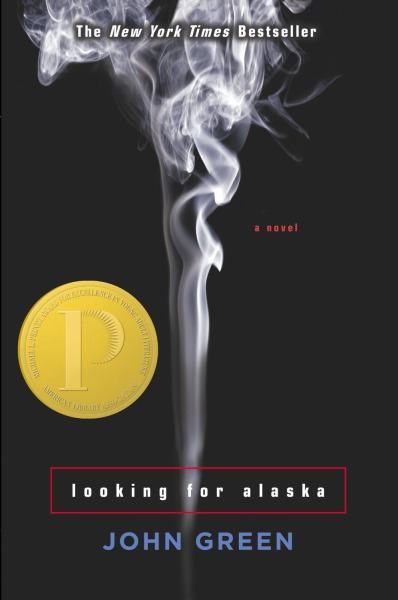
Looking for Alaska | by: John Green

Despite my deep love for the first John Green book I'd ever read, The Fault in Our Stars, it has taken me a few years before even getting my hands on a copy of Looking for Alaska. I tend to avoid situations in which tears are inevitable, and based on what I'd heard about Looking for Alaska, it sounded like tears would be inevitable.

This assumption was proven correct.

I'm sure most people - even the ones that haven't read it - have a general idea of what this book is about due to its massive success and critical acclaim. Pudge (his real name is Miles) narrates the story starting when he first leaves for boarding school. His life hadn't been particularly exciting before and he's hoping to change that in this new setting filled with new people. He joins a group of eccentric and adventurous friends, one of them being Alaska Young, who he may or may not be in love with. She's mysterious, moody, yet full of life, and she's about to change Pudge forever - some ways are intentional, others are not.

Pudge got way more than he asked for... He got what no one would ever ask for. But I loved reading about him and his group of friends. I loved Takumi, and Pudge and the Colonel's friendship was demonstrated so honestly and perfectly. It was so beautiful and sad to see how they'd need each other as the story progressed. But part of the reason they're all so great to read about is that John Green didn't try to make any of them 100% likeable. They're all flawed in some way or another - even aside from Alaska - and that made them more lifelike. Anyone who is going to connect with any of these characters will connect on a deep level because of it. Furthermore, I was just as confused about Alaska as the rest of the characters, and that made it all the more important in making me want to find out what exactly happened to her and what she was feeling.

And of course, John Green's writing is just flawless. Despite the wonderful characterization, the intriguing and easy-to-relate-to themes, his books wouldn't be as amazing as they are if he wasn't so damn great with words. There are a lot of beautiful passages in Looking for Alaska, but that last paragraph has to be one of my favorites in all of literature. Not only does everything he writes sound beautiful, but it's filled with these gut-wrenching emotions that readers can't help but feel along with the characters. I cried - granted, I only cried about 10% as much as I did when reading The Fault in Our Stars, but still. Green's words on forgiveness, loss, and guilt truly resonated with me, and even the quotes he chose to weave into the story were beautiful and perfectly matched... I think I picked an appropriate time in my life to read this, if I'm being honest.

But I doubt that anything I'm saying is any different than what everyone else has said about this one. The entire Internet told me that Looking for Alaska was brilliant, and it was. Once again, John Green got me right in the feels and left me thinking about his characters days after I finished the book. Damn that genius.

Friday, June 5, 2015

Amy and Roger's Epic Detour | by: Morgan Matson

I've decided that I don't read enough contemporary, and one lovely day when I was at a bookstore decided that I'd randomly give Amy and Roger's Epic Detour a try, especially since I'd read a number of positive reviews of it over the years and it was seriously time for a summer read. Amy and Roger's Epic Detour ended up being exactly what I was looking for and exactly what I expected with a great combination of lighthearted moments and darker emotions. It's definitely not a new favorite but it served its purpose and I really enjoyed it.

Amy Curry needs to move all the way across the United States, from California to Connecticut. She and her family need to 'start over' after her father's death, which she blames herself for. Ever since the accident Amy has refused to get behind the wheel of a car, so an old friend from early childhood that she doesn't really remember, Roger, has agreed to drive her on his way to his father's home. In search for personal answers concerning Roger's last relationship and Amy's unspoken grief, they decide to take a detour, and they go from being near strangers to something much more.

Amy and Roger's time on the road leads to a lot of growth and development for both of them. This, and their budding relationship, marks the novel's best asset: The transitions are so smooth. And really, when you think about it, the book's premise sounds like insta-love just waiting to happen since Amy and Roger are essentially all alone and sometimes have to share beds, but Morgan Matson keeps it real. Plus, both characters have their flaws, but none that make them particularly unlikeable, and they meet some really nice people on their trip. That's not to say that everyone is lovely though. Amy's mother tended to bother me even though I did feel sad for her, and let's face it, no one likes Roger's ex, Hadley. The only thing that was a little strange was how willing Amy was to telling strangers about her problems before people she knew... But then again, that's also understandable.

Not everything is resolved in the end. I realize that may bother some people but it doesn't bother me; sometimes we just have to hope that everything will fictionally work out the way we want it to. However, the ending also enforces that we really never know what's going to happen. Ever. That theme prevails throughout this book, and on one side it's bleak, but it's also exciting and full of promise. You know, deep life stuff we all love. Even though there's a lot of serious drama (is that even the right word?) going on and I got a couple tears in my eyes here and there, the road trip itself is exciting and the romance is kind of fluffy.

The way Matson lays out the novel, with Amy and Roger's travel playlists and the actual photos she took when she went to all these places, made the experience really unique. I've never encountered anything quite like it, and I don't really have any major complaints with this book. I think my least favorite aspect was the writing style, but it's not that it was bad, it just didn't stand out to me. But like I said, I really enjoyed this book, and I understand the hype. It's a great summer read, and that's just what I needed.

Tuesday, February 3, 2015

Top Ten Tuesday: Top Ten Contemporary Books I Can't Believe I Haven't Read

Top Ten Tuesday is a fun bookish meme held at The Broke and the Bookish, and this week, bloggers were asked to create a list of books we can't believe we haven't read from any genre we chose, and I chose contemporary. I love contemporary. It has a way of making me feel feelings, and in result so many of the contemporaries I read become favorites. The thing is... I don't read it a lot. I don't know why, but I just don't. I guess part of the reason is that a lot of contemporaries make me cry (and I'm not fond of crying... I will wait forever to read a book if I think it'll make me cry) and I just love genres like science fiction, paranormal, and fantasy too. I read a little bit of everything, yet somehow contemporary is what I probably read the least (well, aside from non-fiction... I don't read enough non-fiction either).
 
I'll warn you all ahead of time: You will probably be shocked when you read some of the titles this list. You will probably think I live under a rock, and then question how I fit my computer under the rock to type all this. You will wonder how it is possible for a lover of young adult fiction to have not read these books. Frankly, I wonder the same things...
 
Top Ten Contemporary Books I Can't Believe I Haven't Read

1
Graffiti Moon by Cath Crowley

2
Looking for Alaska by John Green
 
3
A Note of Madness by Tabitha Suzuma
 
4
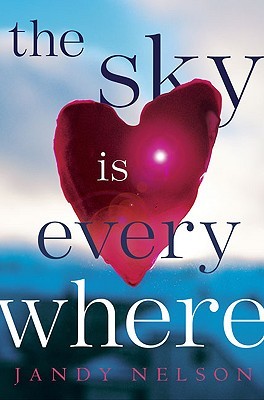
The Sky is Everywhere by Jandy Nelson
 
5
Anna and the French Kiss by Stephanie Perkins

6 & 7
Eleanor and Park & Fangirl by Rainbow Rowell

8
If I Stay by Gayle Forman

9
The Casual Vacancy by J.K. Rowling

10
The Absolutely True Diary of a Part-Time Indian by Sherman Alexie


As always, feel free to let me know what you think of my list (in all of its ridiculousness) and leave me a link to your Top Ten Tuesday... perhaps there are others who apparently live under a reading rock as I do? Probably not, but we shall see. Have a great Tuesday!

Sunday, June 1, 2014

My Life Next Door | by: Huntley Fitzpatrick

Samantha's mom is prim and proper, a republican political figure running for office. They live in a spotless home, and lately, Samantha's been spending a lot of time there alone since her mother is always off doing campaigning. But, Samantha's life is about to change as she begins to mingle with the neighbors (the Garretts) that her mother despises. They live in a house absolutely stuffed with children and all the chaos that comes with it, which is a nightmare to her mother. So things get complicated when Samantha starts falling in love with Jase Garrett. The world she knows is ever-changing; she's found love but her mother would flip if she found out about Jase, and meanwhile, her mom has this new man at their house.
 
Huntley Fitzpatrick's My Life Next Door is the perfect summer contemporary with its warm, seasonal setting and its combination of serious and lighthearted moments. I thoroughly enjoyed it.

There's really a lot going on in this book but there's still time to smell the roses. There are a lot of sweet moments with Samantha and Jase as well as all the children in the Garrett household, and sometimes, even with Tim. Everyone has their own set of problems, and all these issues overlap in some way or another by the time the book is over - and there are a couple you won't see coming. Samantha and Jase's families blatantly contrast, and really, the concept of family contrasts is what drew me to this novel in the first place. It's a concept that has always interested me, but it seems there aren't too many books that exemplify this.

But Tim was also a really intriguing part of the book; not only because of how his addictions affected him and everyone around him, but his general character. He could be a jerk or he could be funny, and frankly, he could be both at the same time. In fact, one of the things I loved most about this book was how funny it could be; and that's something I didn't expect at all. But I guess when eight children under one roof are a prominent set of characters, things are bound to get interesting. George was adorable, but Patsy also kept me smiling with her unique first words.

I must admit though, there were moments where I'd get frustrated with Sam and her inability to see what's really going on or what she should do, and perhaps a time or two where bits of the dialogue seemed a smidge cheesy. And I really did not like Nan. But overall, My Life Next Door is a very solid book; I gave it 4/5 stars on Goodreads. I feel like I don't have too much to say about it because while I can't say it's a new favorite, it's definitely a fun and interesting read. Like I said, it's prefect for summertime, and I'm sure anyone that enjoys contemporary novels will gobble this one right up. There's drama without being over-the-top with sadness or other negative emotions, a forbidden romance, and plenty of humor - really, what more could anyone else ask for in a summer read?

Sunday, March 9, 2014

Marcelo in the Real World | by: Francisco X. Stork

People that have read some of my other book reviews may know that I tend to attack the to-be-read list slowly and in a disorganized fashion. Sometimes, it takes me forever to get to books I most anticipate, but I must say that Francisco X. Stork's Marcelo in the Real World officially has the award for longest time on my TBR: About four years. For one of those four years, it was sitting on my bookshelf. And let me tell you, this was basically at the top because I was extremely interested in it, so I don't know how I let this happen.

All I know is that now, I'm kicking myself in the arse because Marcelo in the Real World is now one of my favorite books of all time, no questions asked.
 
Marcelo has a form of autism. Social situations make him very anxious, he tends to speak in third person a lot, he frequently quotes the Scripture, and he can hear a mysterious music in his head. These characteristics make him a bit different, and he's gone to a school for kids with special needs his entire life. But even his doctor says that he'd be fine in any given public school setting. His father wants him to take advantage of the fact that he's a high-functioning individual and could go to public school if he wanted to, so he has Marcelo work in his law firm for the summer to see how he handles it.
 
During this time, he meets Jasmine, whose general persona heavily contrasts with the rest of his co-workers. Together, they make discoveries concerning the law firm's current problems as Marcelo is finding out what type of person he can be amid the peer pressure thrown on him by a worker with an unhealthy infatuation with Jasmine. "The real world" can be a horrible place, but one photograph leads Marcelo down a path to discover how to deal with it.
 
I could not put this book down. It's been a while since I've read a book so utterly perfect, and I'm not entirely sure how to effectively put my love for it into words even though I've been dying to talk about it ever since I began reading.
 
First of all: This story has so much depth. I mean that in terms of plot, characters, and emotion. Francisco Stork made everything and everybody so complex and real, which is why this book couldn't have possibly been any better. If Marcelo felt something, I felt it too. The nervousness, the butterflies, disappointment... Everything. Marcelo and Jasmine were crafted so vividly and naturally, and I loved them as characters. They're great people in general, and Marcelo's innocence is impossible not to love; it hurt to see him discover how awful the world can be. And Aurora - what a sweetheart.
 
But Stork also made the unlovable characters with emphasis, which is why I disliked them so much. I wanted to kick Wendell - I'm sure you can all guess where. His father was a jerk too, but Wendell was more prominent throughout the story. He's a creepy perv, just like Jasmine described, and he kept trying to take advantage of Marcelo's signature innocence to get him to do whatever he wanted. Marcelo's father, Arturo, also made me angry quite a bit. I understand that he wanted to believe that Marcelo never had any differences, but I don't think he ever accepted reality of respected those existing differences. But really, a lot of people pissed me off in this book because of how the treated Marcelo. And what's worse is that I know that people are like this outside of this book.
 
Considering how many rotten aspects of the world is highlighted in Marcelo in the Real World, I expected this to be an extremely depressing book. Even though there were definitely parts that saddened, worried, and angered me, the concept of dealing with the negatives with positives really shined. People like Marcelo, Jasmine, Jerry, Ixtel, and Aurora are constant reminders of that. Plus, Marcelo and Jasmine's somewhat-indirect romance kept my heart fluttering.
 
Anyway. I've never read about anybody autistic before, so this type of POV was new to me. I was fascinated by the scientific aspect, the music in his head caused by activity in the temporal lobe. The concept of a boy that can hear this music in his head is one of the main factors that attracted me to this novel in the first place, actually. I loved the musical and religious aspects.

Marcelo in the Real World is so well-written and deep... I don't think I've ever encountered a novel so incredibly underrated as this one. I would've at least thought that the gorgeous cover (it's one of my favorite book covers of all time) would've attracted the masses, and then even more because people would've discovered that the story is just as amazing on the inside as the outside, but I digress. I'm perfectly happy having this book all to myself. I'm seriously considering going back through my Goodreads and changing some of my five star ratings to fours because of how mesmerizing this book was. I feel bad for the next book I read because perfection is certainly one tough act to follow. I loved it beyond what I'm capable of expressing.

Tuesday, August 14, 2012

The Fault in Our Stars | by: John Green

Hazel is living with cancer, and everyday she must carry around her oxygen tank in order to breathe. Her lungs just aren't doing well in her fight against the cancer she believes will eventually kill her. During this bleak time of negative emotions and physical struggle, her caring mother makes her attend a Support Group at a local church. Since Hazel doesn't even like Support Group that much, she didn't expect it to completely change her life forever. She didn't expect to meet Augustus Waters.

Together, the two of them journey through life exchanging books and ideas, even love.

The Fault in Our Stars is award-winning author John Green's newest novel, and it is also the first I've ever read by him. After watching his Vlogbrothers videos on YouTube, I had already determined that John and his brother Hank are perhaps the coolest people on Earth, so I was definitely looking forward to reading one of John's novels. However, I held off on this book for a while because I had a feeling it would make me cry, and I was right.

John Green is a remarkable man. Only he could write this a story in such a way where I might be sobbing one minute and giggling the next. Augustus Waters and Hazel Lancester are such unique and amusing characters (which is most evident in their dialogue, which I find relatable), and that's half of the reason why their relationship ended up being so engaging. The other half, unfortunately, is the tragic manner in which it all happens. With these utterly human characteristics, I couldn't put this book down; I flew right through it.

Of course, the complexity of Peter Van Houten was also an interesting factor to see play out among these pages. There was a lot of his character that I didn't expect, but I won't give anything away.

I already know I'm not the best journalist out there; my heart has always been with creative writing and I hope it always will be. Though I never considered myself to be the most astonishing writer anyway, after reading this book, I feel like a really crappy writer. John Green's just so... good. He'll grab your emotions and won't let go even if you already feel kind of miserable. But, that's not to say there's no hope in this book, because there is. Sadness isn't the only thing readers will feel when reading The Fault in Our Stars. Like I said earlier, there's humor in this book. There's humor and friendship and love. There's life.

One of the many, many things I loved about this book is the honesty. Everyday, we hear the same things about anyone that dies, not only cancer victims. Once someone dies, everyone loves them. People that barely talked to them suddenly think that they were best friends. Everyone talks about how strong they were as they fought. But most of these people don't even know what they're talking about. The people closest to the victim do know how hard it all can be, how hard it was. I don't know why people get so weird when someone dies, so appreciative and caring of someone they didn't pay much attention to in life. If it were that simple, of course it would not be an issue. But there's an extremity to it that's just so melancholy and fake about it, and it makes me sick.

The Fault in Our Stars is one of my favorite books, and I really can't say enough about it. Words of appreciation don't seem to do it justice. Still, I can't stop thinking about it, how each element came together so perfectly. It deserves all the praise it gets; there will never be another novel like this.

5/5 Stars


Green, John. The Fault in Our Stars
New York: Dutton Books
2012

Wednesday, April 21, 2010

Thirteen Reasons Why by: Jay Asher

I just finished this book literately minutes ago.

Thirteen Reasons Why is one of those books you can't put down. For one thing, this whole book (except the last chapter) happens in one night. For another thing, it's just so interesting! I was completely into it the entire time!

At first, I wasn't a fan of Jay Asher's writing style, but I think it got better as the story went along, or maybe I was just to involved with the story to pay attention to his writing style.

The story starts out with a bit of mysterious mood. Clay Jensen receives a box of audiotapes that a girl named Hannah Baker recorded explaining why she ended her life. Clay listens to all of the tapes, all in one night, searching for his name to appear on the tapes, since everyone that received the taped was a reason for Hannah's death. With this summary alone, you can assume two things. One: This is kind of sad. Two: This is kind of deep. And if you assumed those two things, you assumed right.

As a matter of fact, Thirteen Reasons Why is also haunting. Hearing a dead girl talk in your ear about the events that happened which caused her suicide can be described only as haunting, especially when it's Hannah Baker. Her words were so full of emotion, and that emotion is enough to take a toll on anyone who listens, whether her story is sad or not - as it did for Clay.

This story is heartfelt, haunting, and even beautiful when you look at it through some perspectives. I admit, I cried a little during some parts. You can't help but to feel for Hannah and you can't help but to feel for Clay. Books, like Thirteen Reasons Why, the books that make you feel something, are the best part of reading. And when you learn from them, like this one, you always carry it with you.

Thirteen Reasons Why can carry a 5/5 star rating from me with it now.

This is an astonishing start for Jay Asher. I'm hoping he will write more and more books for me to read (and, of course, review) and maybe make me teary again.