Sunday, December 9, 2012

Favorite Musical Singles of 2012 (Part 1/4)

Since 2012 is coming to a close, I thought I'd share my favorite singles released this year!
 
This will be the first of four posts. Each of these four posts will contain four videos of my favorite singles, making that a total of sixteen songs to expect over the course of the week. I will post the other three posts every other day this week.
 
Initially, I tried to order these numerically, making it more of a countdown, but the order ended up relying on how much I love the artist, it felt biased in result. So, I decided to randomize them. Plus, I just love these songs so much.
 
I hope you enjoy these four great songs as well the others coming within the week!


"Youth Without Youth" by Metric
This is an awesome, fun song that makes me feel BA whenever I listen to it.
The album that this single came from, Synthetica, is a fantastic album
that has multiple tracks that are just as cool (or even cooler) than this
song.


"Summertime Sadness" by Lana Del Rey
Lana Del Rey brings a heavy darkness to indie pop with
"Summertime Sadness," and the video does that darkness justice.
It's both mellow and melodic, and even though I wasn't a fan from
the get-go, the greatness ofthis song, as well as the other tracks on
her debut album Born to Die hit me like a ton of bricks.


 "The Other Side" by Evanescence
"The Other Side" is a promotional single from my favorite band's
latest self-titled album (which I loved). Though it's not a happy song,
it's definitely upbeat and catchy both vocally and instrumentally.
As a promo single, it has no official music video, but it does have
an official lyric video in which I have posted.


"Ride" by Lana Del Rey 
Lana Del Rey released a new edition of her debut album (The
Paradise Edition) which includes a bunch of new songs for us
to love, including this single. The song itself is very pretty and
melancholy, but the video doesn't do much for me, personally.

Sunday, December 2, 2012

Paradise | Lana Del Rey

Indie-pop artist Lana Del Rey has recently released a new EP entitled Paradise, an addition to her album Born to Die (though it can also be purchased separately). Now, I can tell you that I thoroughly enjoyed Born to Die, but it took a long time to grow on me. When I wrote the review of that album, I wasn't the most fond of it, but I wrote an edit at the bottom explaining that every slight bit of positivity I found became magnified and granted it another star.

Paradise didn't take that extra time to grow, for Lana Del Rey has improved. The very first track (and single), "Ride" still has everything Lana did well on Born to Die. Her voice is relaxing, the music and lyrics are moving... but it's just... better. I didn't have to try and love it; I loved it immediately, especially the strings and how they become even more present towards the end. I totally didn't cry a little the first time I heard it, either. "Ride" is easily one of my favorites.

"American" is the next song, and the strings are still taking the stage, but it does have its poppier elements as well, which somehow reminds me of Bjork's "All is Full of Love" at times (but only on an instrumental level). It's a bit gloomy without being too much; it's nostalgic. Really, that's the best way to describe most of Lana Del Rey's Paradise. It feels incredibly nostalgic.

The next planned single is called "Cola", and oh my goodness, it's weird. Just go listen to those beginning lyrics and anyone will see what I'm saying. As a whole, the song is more fun-sounding than the previous tracks, particularly the chorus. The bridge takes an unusual turn since Lana decides to show off a bit vocally and hits notes that she doesn't normally attempt. "Cola" is definitely my least favorite song from Paradise; it simply doesn't do much for me.

Oppositely, "Body Electric" is one of my all-time favorite Lana Del Rey song. It's very eerie. Sure, Lana Del Rey has made darker music than most, but this song takes it to a whole new level. It was one of the two songs I was most excited to hear from this EP, the other being Lana's cover of "Blue Velvet." I loved hearing it on Lana's H&M commercial and wanted to hear more. She's great with this kind of music, and I hope she continuous to offer quality music such as this.

"Gods and Monsters" seems to be the most pop-friendly song on the album, and I simply cannot relate to it at all. Musically, it sounds catchy, but lyrically, I feel extremely detached. It seems to be about someone extremely reckless without a good sense of what's good for her. Though the general meaning isn't bad and something I'd actually like to hear about, I find myself wishing Lana Del Rey could be more feminist lyrically. I think I'll be able to appreciate this more with time if I can get past the certain irritation I feel.

"Yayo" (whatever that means) returns to the melancholy mood that was set towards the beginning of the album. I'm a little confused lyrically, but there's nothing wrong with the song. It's quite relaxing. If I were to compile a ranking list of the tracks of Paradise from best to worse, "Yayo" would be the middle ground.

The album ends quite peacefully with "Bel Air," as it is reminiscent of a lullaby. The whole feel of it is very different than the rest of the album. Even though it still has a darkness to it, it's so much lighter than the rest of Paradise as well as Born to Die. It's more pretty than it is anything else, like the single that introduced me to Lana Del Rey's music, "Video Games," but it's still very different than "Video Games." It has more of a film score-type of magic to it, too good for real life. That being said, "Bel Air" is another one of my favorite Lana Del Rey songs.

Paradise has a lot to offer. As good as Born to Die is, in the grand scheme of things, it has quite a few repetative sounds. Paradise breaks Born to Die's habits since this EP is different, offering a sound that's even more chilled-out and pretty. It's more soulful and jazzy than anything, breaking from traditional indie pop. The music this woman is making goes to show that some genres will never die, even if they are often hidden by the generic radio stations that will play the same five songs that sound the same until audiences are finally ready for another generic set. At the end of the decade, century, or any other length of time, quality music is still quality music.

4.5/5 Stars


(If you read my review of The Family Tree: The Roots by Radical Face, you know that I was ready to give up star-ratings. As of now, I am unsure... I hope to post about this sometime soon.)

Friday, November 16, 2012

The Twilight Saga: Breaking Dawn, Part Two | Screenplay by Melissa Rosenberg and Stephenie Meyer | Directed by Bill Condon

*This review contains spoilers for those who have not read the novel.

Much like with Breaking Dawn: Part One, I didn't have high expectations for this final Twilight film. Though the second half of first part managed to exceed my low expectations in the end, it was because of the way the corniness fell away during times of action. I did not expect much of any action in Breaking Dawn: Part Two, simply because I thought that the two-part split would not work. Everything that I envisioned to be most entertaining on screen happened in the first part, so I thought Part Two would be a bit boring, leaving room for the inevitable gushiness that the movies in this series tends to bring - except for this one.

The filmmakers threw a major curve ball at me, and I love it!

In this film, Bella thinks she has the 'forever' she's always wanted as a vampire, and she has to deal with the quirks that come with the lifestyle. (This includes hunting and trying to look human.) But of course, the Volturi become suspicious of her mixed-breed daughter, Renesmee, and the Cullens know they can't convince them that she's harmless without some help. Even with Jacob and the wolf pack on their side, it may not be enough despite Jacob's strong connection to Renesmee.

But let's not get ahead of ourselves. Let's start at the very beginning... The opening credits.

Yes, I'm even critiquing the credits. That's probably not normal, but seriously - the credits looked awesome! The names and background kept switching from a normal woodsy scene to red. Despite the cool-looking credits, they went way too fast; it felt odd. Really, the beginning of the movie felt a little bit sped up.

As I mentioned earlier, the corny element I always complain about in this series is barely there. Of course, there's affection, but it's cute. It's sweet. It doesn't make me roll my eyes. And I'm not just talking about Edward and Bella's love story, I'm talking about Renesmee's protector, Jacob. Breaking Dawn is the book that really made me fall in love with Jacob. He's a dependable, all-around good guy and Taylor Lautner did a great job portraying him in this film.

Another thing that contributed in making me take the movie seriously is the film score, which was much better compared to some of the other films in the series.

I know I've said this every time, but I'll say it for the final time now: This is the best movie in the series. Though I've said it before, I've often meant 'well, this is a little better than the last one.' Breaking Dawn: Part Two buries the previous four movies in the ground because for the first time, they tricked the audience. (I promise not to spoil.) They changed something without changing anything, and that made it the good movie it was. If they did not throw the curveball, this movie would have been as boring and nearly uneventful as I predicted. It was the BEST part.

Am I saying that the movie got it right and the book got it wrong? No. The fact of the matter is, some things in books don't work well on screen. (Honestly, I've even seen movies with original scripts that I thought would have been better in novel formation...) The filmmakers knew that they couldn't possibly target a movie audience unless they made things a little more eventful even if there's nothing wrong with the book.

Don't think that this adaptation isn't true to the book either, because it is.

Anyhow, the very end was sweet, just as the book's ending was. I liked that they put actors' names with character faces at the end along with occasional pages from the books. In fact, this movie's ending note was perfect... I'm sad to see it all go now. But, I'll always have the books to revisit as I wish; for at the end of the day, The Twilight Saga offers good fun and an enjoyable love story that made me happy.

Wednesday, November 7, 2012

Dilemmas with Cinemas

I have a problem. Truth to be told, I have a series of problems.

There are so many movies that I want to see, but I only end up seeing no more than six a year. (How often does the average person go to the movies a year anyway? Is six a normal number?) Either way, I don't get to see nearly as many as I want. Since I'm an avid book-lover, I tend to go see movies that are based off of the books I've read. When you take into account for how many books series' there are, that's a lot of film adaptations. But... why do I even need to see to see these adaptations? Honestly, I've always felt like it was some sort of fan obligation. Though my curiosity would drive me crazy in some cases, there's always the rare occasion where I really don't care.

November 16th is the perfect example. Since I enjoyed the Twilight books (DON'T JUDGE ME), I feel obligated to see Breaking Dawn: Part 2. But quite frankly, I'm just so pessimistic about this movie! The two part split was utterly unnecessary and every film adaptation in this series has been corny. Besides, all of the interesting events in the book have already happened in the first part; why should I bother with this movie? I have nothing to go for.

However, I do want to see Lincoln, which debuts on the same day. Steven Spielberg's magic glorifying my favorite president in movie form? I'm in! And am I the only one completely enthralled by this movie's TV spot? It's even better than the theatrical trailer. Has anyone else ever seen a TV  spot better than the theatrical trailer? Not I.

Watch it; it's only about 30 seconds:


So, why not see both? Well, my mother really, really, really wants to see Breaking Dawn: Part 2 for one thing, and for another thing, going to the movies is overly expensive. By the time I get my popcorn, soft drink, and cookie dough, I feel like I'm pouring money down the drain. The fact that the food is overpriced isn't the only problem, though. I can't even consume everything I buy! I always buy a small soft drink and popcorn, but smalls aren't even small! How can someone eat/drink all of that? It's ridiculous! If you ask me, they shouldn't even be called small, medium and large; they should be called, big, bigger, and huge.

Not to mention how embarrassing it is to cry in a movie theatre. But the worst part isn't that I cry at nearly every movie, the worst part is that I've also cried during the trailers. When I saw the Harry Potter and the Deathly Hallows: Part 1 trailer in the cinema, I probably looked like I was having major respiratory issue. (TRAILERS ARE AMAZING, OKAY!?)

Yet at the end of the day, despite all of my complaints about going to the movies, it's something I really do like to go out and do. It would be wonderful if my complaints did not exist; then I'd be able to go more often and actually see all (or at least most) of the movies I'm interested in. Until that day comes, I will remain choosy.

Monday, October 15, 2012

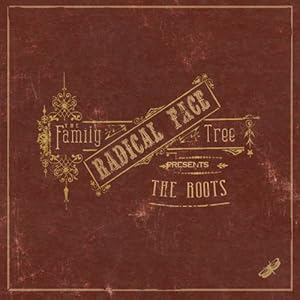
The Family Tree: The Roots | Radical Face

As I watched the wonderful movie trailer for Stephen Chbosky's The Perks of Being a Wallflower, I noticed the great indie music playing and had to find out what it was. From this search for a song, I ended up discovering Radical Face. Radical Face is a one-man-band consisting of a talented musician named Ben Cooper. This particular album, The Family Tree: The Roots, is the first of what is said to be a trilogy of albums, and it is currently the only album of that trilogy released.

The first song is more of an intro, and it is called "Names." It has a rainy background as Cooper comes in singing with his guitar ever so peacefully. Since it's so subtle, it doesn't really prepare one for the next song, "A Pound of Flesh," which is led by a pretty piano line throughout its entirety. Of course, other instruments and Cooper's voice comes in to begin the first verse, adding layers to the great song. Though one can imagine what a song called "A Pound of Flesh" would sound like, I can assure it's quality music. From Cooper's lyrics, to the music itself, to his vocals, the song is catchy and relaxing. It's the epitome of indie music, and that example doesn't just stop there, it continues in every track.

"Family Portrait" follows, beginning with a choral sound and then stopping for the piano, and eventually guitar, drums, and Cooper's voice. The melody is a bit odd-sounding, almost quirky. Lyrically, the same can nearly be said, though they're more unusual than quirky. More than anything, Cooper is telling a story, which is really what this trilogy of albums is all about anyway. Still, I can't get into this particular song.

The fourth track is called "Black Eyes," and unlike the other songs, it has an eerie melody to it. This seems to help demonstrate the angry lyrics in a crazier way than they might have been on any other album. Don't get the idea that the lyrics aren't well-constructed, though, for they are actually quite good. And though this song is full of rage, it isn't loud and obnoxious. Much like humans dealing with anger on a day-to-day basis.

In "Severus and Stone," the pretty element found earlier in The Family Tree: The Roots returns. But it's a bittersweet sort of pretty, because it's actually a very sad song about the death of a twin brother. Honestly, I cried. Ben Cooper's lyrics paint a picture that's almost too clear, making it more like poetry than typical song lyrics which are often too vague. This song is certainly a highlight from the album and one of my personal favorites.

Like a lullaby, "The Moon is Down" is a soothing, subtle (but not in a bad way) love song. Seriously, Ben Cooper might sing one to sleep while listening to this track. There's beauty in the simplicity, like with most of my favorite indie music. "Ghost Towns," the seventh track, brings a bit of a different feel than "The Moon is Down." It's more upbeat, more of a walking song than a sleeping song, but still touched by the melancholy reality of physical separation though love is still present. I enjoyed it.

A distant thunderstorm can be heard in the next song, "Kin," which sounds like a rainy-Sunday song even after the rain effects are gone. There's nothing bad about this song (other than the fact that it'll be annoying when stuck in one's head at night) but it just doesn't please me as the rest of the songs do.

But, a love theme returns with "The Dead Waltz." This time it's almost a dreamlike story, yet it's still so realistic. Untainted by negativity that can prevent love as described by "The Moon is Down" and "Ghost Towns." Though I like it better than the last song, it still doesn't seem to entice me as much despite the lovely lyrics.

"Always Gold" is the tenth track on The Family Tree: The Roots, and probably the most likely to do well as a single. The beat of this song is clapped out, giving it a more spunky feel in the verses, but the chorus removes that vibe in order to bring the listener chills. It frustrates me that I can't really explain why this song is as great as it is, so just go listen to it. Go listen to this entire album.

Cooper saved an amazing song for last on this album, and that song is called "Mountains." I am at a loss for words for this song. Truthfully, it's hard for me to describe any of these songs, and it's quite obvious since this review is so poorly written in its repetitiveness. All I can seem to say is this: It's amazing how well Radical Face describes life. I don't think I've ever heard it described so well until now, and this goes for both the music and lyrics. Life isn't a black-and-white subject, it is a grey area. Things aren't just sad or just happy, but often bittersweet, since life comes with a magical combination of positives and negatives that balance each other out. But then again, this doesn't go for just "Mountains," it goes for the whole album.

On a more specific note, "Mountains" is about a boy who lost his mother and is assured that she's still there watching over him. Each night he has a hope of seeing her once more, and it almost feels like everything is okay. The piano is beautiful, as usual, and Cooper's voice is calming, as usual. But there's something about the semblance of it all, the way in which the message is carried out, the way in which it was written.

For whatever reason, Radical Face's The Family Tree: The Roots is difficult to explain and describe. The lyrics are moving. The music is calming. Sure, similar instrumentation is used over and over again in each track, but the tracks don't blurr together either. It doesn't make it boring in any way. The reality of real life is demonstrated in such a beautiful, poetic way...

This is one of those albums I can't help but reccommend to anyone and everyone.


(As of now, there will be no more star-ratings.)

Sunday, September 9, 2012

Classics: Jane Eyre by Charlotte Brontë

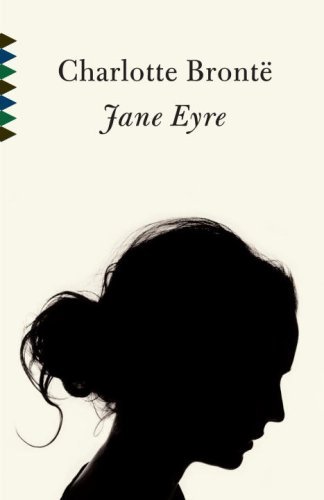
Note that this is not the cover of the
edition cited.
Orphaned at a young age, Jane Eyre's childhood with her aunt had been one of terrible mistreatment though she'd done nothing to deserve it. Later, she gained liberation by going to a badly-run school, but it is at the ripe age of eighteen where her life seems to really begin. Jane needed a change, and becoming a governess seemed to her a bright future.

Then she met Mr. Rochester, and life would never be the same.

Jane Eyre was a rather groundbreaking piece of work for the 1800s as it is such a feminist novel. Where would we be without women like Charlotte Brontë to blatantly state such equality? Even now, after all these years, it contains a particular uniqueness and holds a place in many a heart, including my own.

That being said, Jane Eyre is one of my favorite novels. Whilst reading it, I never wanted it to end. When I reached the last page, I felt a bit of a pang inside, for I could read about Jane and Mr. Rochester forever if Charlotte Brontë willed the story to last so long. For not only is this an interesting story, but Jane is relatable, and Mr. Rochester is quite passionate as well as different than most love interests.

Of course, Jane is admirable for her amount of feminism. She thought of her feelings (though she cared for others) and therefore said and did what she felt she needed to do in order to be happy. But even before she grew to be an independent young woman, she had still contained a unique spirit when she was younger still. As a child, Jane had been forced to hold in a lot of anger toward her aunt and cousins. Watching her finally release some of that felt refreshing, especially since I tend to think similarly to her when I am angry. She felt she didn't need to be nice to those who wronged her, unlike her friend from school, Helen, who is a very forgiving and peaceful young lady. Everyone should long to think as positively as Helen, to be as sure as themselves. Still, different as they were, both girls' characters leave a memorable, even admirable, impression.

Now, onto the subject of Mr. Rochester, the man Jane Eyre would come to love. Mr. Edward Rochester happens to be my favorite love interest, as his romanticism is most favorable and swoon-worthy. He's not an ordinary man; he has idiosyncrasies that almost strike as odd. But the best part about him? He's not perfect. Not even close. In fact, one thing I admire in this novel is this: Jane Eyre is a story that contains a love interest who is described as ugly. Thank God. It is probably strange to wish for an unattractive love interest, but let's face it: Not every girl is going to fall in love with/ be loved by the hottest guy one the planet. This fact has rarely even been depicted in love stories, and it takes away from a romantic connection when you hear the main character blab about her boyfriend's appearance. If a female is reading this right now and is becoming quite disappointed by such a statement: Wake up.

Besides, another thing I loved about his book is that it shows how someone's physical appearance may seem to change as you get to know a person. Are they still unfavorable in general appearance? Yes, but that shouldn't matter. Anyone who says it mattered to Jane is confused, for she loved Mr. Rochster purely as anyone could ever love. Jane has even told Mr. Rochester that he isn't handsome, but does anyone care? No. Mr. Rochester is handsome in my book because his character is handsome. Jane could certainly say the same.

Jane and Mr. Rochester's relationship frequently made my heart flutter and mouth smile, but if either was ever discontent, my heart sank. Of course, interesting twists concerning these two characters came along, and the way Jane deals with them makes her stand out as a female character. As previously mentioned, Jane did whatever she could in order to make herself happy, even if the costs were unfortunate.

One of my favorite quotes said by Jane: "Do you think, because I am poor, obscure, plain, and little, I am souless and harmless?" (Brontë, 2011, p.255) Any idea how many times I would like to say that?

Anyway, the ending of Jane's autobiography is a well-deserved happy one. I couldn't stop smiling, of course, until I reached the end of this beloved tale. Sometime soon I hope to reread this story, as it means so much to me.

Although the time to review such a classic like Jane Eyre is long gone, I will still give it 5/5 Stars. It is one of my favorite books containing a couple of my favorite characters, and it is unforgettable and enjoyable to say the least.


Brontë, Charlotte (2011) Jane Eyre. London: Harper Press