Tuesday, June 17, 2014

Top Ten Tuesday: Top Ten Books on My Summer TBR List

Top Ten Tuesday is a fabulous meme hosted at The Broke and the Bookish. Today, we're going to talk about our TBRs!

Top Ten Books on My Summer TBR List

1
A Million Suns by Beth Revis
 Yeah, I know I'm pretty slow at this whole 'let's finish the series' thing. I finally got around to getting a copy of the second book in Beth Revis' sci-fi trilogy, and I've honestly been putting off reading it because if it's anything like Across the Universe, I won't be able to put it down. That's awesome and everything, but the best time for me to read this is when I don't have so much stuff to do so I don't have to torture myself by reading parts and then having to stay away.

2
Villette by Charlotte Bronte
This was on last year's summer TBR, but unfortunately, I didn't get to it then, or in the fall, or in the winter, or in the spring... I guess I got distracted with other books. But as I've mentioned before, I've made it a goal to get around to reading everything by the Bronte sisters since I love Jane Eyre so very much. I hope Villette lives up to the hype!

3
Sailor Moon Short Stories 2 by Naoko Takeuchi
 I've been especially eager to read this book of short stories, because it includes the one in which Luna falls in love with a scientist. Ever since I was little I loved this story with all my heart, for it was the basis for the Hearts in Ice movie. Bring on the nostalgia!

4
The Host by Stephenie Meyer
I read this book ages ago and absolutely loved it. Even though I've always planned on rereading it at some point, it hasn't happened yet, which is so stupid because I first read it all the way back in 2009. I really hope I can get to it sometime soon; I just remember binge-reading it late at night until my eyes decided I needed to put it down and sleep.

5
 
Black Spring by Alison Croggon
Check out that creepy cover! I just kind of stumbled upon this book in the library one day and mentally added it to the TBR. It's a fantasy/paranormal tale and it's inspired by Emily Bronte's Wuthering Heights... While I tend to stray from retellings, this one looks intriguing. It doesn't look like it's going to make some sort of mockery of the characters, and it just looks so dark, like Wuthering Heights. I think, I hope, it'll turn out to be pretty good.

6
The Maze Runner by James Dashner
A lot of people have read this book and gave it fabulous reviews, but nothing about it really drew my attention... UNTIL I SAW THE MOVIE TRAILER. Hot damn, that looks epic! And weird! (And Dylan O'Brien is awesome!) I'm definitely going to try and get a hold of this one before summer ends.

7
Cinder by Marissa Meyer
Looking back on my initial expectations for this series, I'm extremely surprised that this is on my TBR. Fairytale retellings just never float my boat. In fact, retellings in general have never appealed to me, to be completely honest, and this is why I've never wanted to read the Lunar Chronicles series. But then I found out about two things: Firstly, that in the third book, Cress, Rapunzel is floating around in a satellite in space. (I LOVE SPACE.) Secondly, that here are Sailor Moon references in this book that no one ever really mentions. Now my curiosity is ridiculously high. I want to see how this story flows and connects with Sailor Moon!

8
Nevermore by Kelly Creagh
I've been curious about this one for years. For pretty much my entire life, I have loved Edgar Allen Poe's work, and this series is heavily inspired by him. So naturally, I'm drawn to it. It appears to be a darker take on YA and paranormal romance, and I'm always up for that.

9
Awaken by Katie Kacvinsky
The premise of this story has always caught my attention; it focuses on an extreme scenario of a very real problem we face today. Technology is making us anti-social. (Maybe that's why I'm sitting here typing up a blog post.) What if we lived in a world with no real person-to-person communication? How would we function without the presence of others outside of the computer screen? Hopefully I can get around to this one soon.

10
Shades of Earth by Beth Revis
I tend to devour series really slowly lately, and I'd rather not wait another year before finishing Beth Revis' sci-fi trilogy. Hopefully A Million Suns is fantastic like the first book was so I have less of a chance of getting distracted and not reading this one.


As usual, show me your list and let me know what you think of mine. Have a great day!

Saturday, June 14, 2014

Crossing the Threshold | by: Amanda Dirlam and Melanie Overmyer

Crossing the Threshold is the first book of the Changeling trilogy, and it is the debut novel of Amanda Dirlam and Melanie Overmyer. They may be new to the bookish scene, but with a story like this, I think they’re going to fit right in.

Shea is a shy high school girl that hopes to get by without much attention. Her home life with her crazed, New Age-obsessed mother isn’t by any means ideal, so she oftentimes seeks refuge with her beloved grandparents or hangs out with her best friend Ty. But other than that, Shea doesn’t have much of any interaction with others due to her ability to withdraw from being anybody’s focus. However, Quinn is a popular football player that suffers from confusion concerning his identity, and even though they make an unlikely pair, the two of them have to complete a project together concerning Irish heritage. As they discover more and more about changelings and prepare for the project, they also discover that their past biases toward another need not apply any longer.

The truth is that they’re both part of something big. Something that concerns both of them is tying them together, but what will it take to get them to cross the threshold from our world into one that’s full of magic?

While this novel is technically a fantasy, it’s primarily set in the world as we know it with flashes of mysterious moments to unknown characters of a different realm. We don’t dive too deeply into the fantasy element, and because of that, it feels more like a contemporary at times. This is one of its best, most unique qualities; I love how it appeals to both genres and how nature is used to represent something more mystical. It will definitely capture fans of either genre’s attention.

Even so, this debut novel handles both genres in a different way. It’s not every day you run into Irish mythology, at least not in young adult fiction. That in itself adds an interesting new concept for readers. I’ve never read anything about Irish mythology, or changelings, and to be honest, I wasn’t even sure of what a changeling was before reading this. I only read one series about fairies before this (Aprilynne Pike’s Wings) and Crossing the Threshold is much different.

However, I must say that what really made this book as good as it was is the characters. None of them are dull. None. I could relate to Shea in ways that I’ve never been able to relate to any character before. At face value, she’s you’re typical nerdy/shy girl, but there’s so much more than that, and it all creates a vivid picture. She has a strong relationship with her grandmother that reminded me so much of my own grandma and my feelings surrounding her death.

And then there’s Quinn… I definitely have a character crush on him. Just saying. He’s just so nice, and it’s easy to feel sad for him because he’s felt so unloved. But it’s so heart-warming to see how he’s an older brother-like figure to the other kids at the orphanage he lives in, and it’s also heart-warming to see him and Shea interact. They’re such an adorable couple; the sparks of romance are sure to make anyone’s heart flutter! And of course, I was a fan of the snarky dialogue.

Even the secondary characters and their relationships stick out, between Shea’s crazy mom, her flamboyant friend Ty, and everyone in between. They all go through quite a bit of development, which is natural because of all the stuff that goes on in this book. There’s never a dull moment – I mean that in a contemporary sense and a paranormal/fantasy sense too. But it didn’t move too fast either; it wasn’t too rushed.

But like I said, even though the excellent characterization is what really shined, it had a lot of great elements. The plot, the general concept, the writing itself… It’s well worth the read. I definitely feel like fans of YA paranormal books will enjoy this, and of course, covet the next one because there’s one heck of a cliffhanger. Crossing the Threshold is such a solid debut; I can’t wait to see what happens next!

Tuesday, June 10, 2014

The Quantum Enigma | Epica

Epica is without a doubt one of my favorite symphonic metal bands. Their music has such a heavy combination of metal and classical; they aren't afraid to make their music as bombastic as possible. While albums like The Divine Conspiracy and Design Your Universe have absolutely stunned me and are a couple of my personal favorite albums, their last one, Requiem for the Indifferent, didn't strike me with that same sense of perfection despite having some great songs. I must say, their latest release, The Quantum Enigma, definitely didn't leave me with the same impression that Requiem for the Indifferent left me with. I've mentioned this type of improvement with a couple different albums lately (i.e. Within Temptation's Hydra, Lacuna Coil's Broken Crown Halo), but The Quantum Enigma doesn't just mark improvement from Epica's last album - it ranks among their best.

"Originem" opens the album on a bombastic, classical scale, as Epica has usually done with their previous albums. While the strings bring intensity, the choir amplifies it. It's an impressive opener and the band hasn't even begun playing yet - until we get to the second track,"The Second Stone." This song begins with a bang. Strings are meshing with metal in such an intense way; I loved this song immediately. Simone Simons' vocal line is incredibly catchy throughout the song - especially the verses and the choral line at the end of the chorus: "Let me believe between sweet fiction and reality." Mark Jansen comes in during the bridge, bringing his signature grunts, and the lyrics are wonderfully-written and intriguing. "The Second Stone" is full of energy; it's one of my favorites from The Quantum Enigma.
 
Next, we have the album's first single, "The Essence of Silence." Even though this song opens with a pretty string line, it turns out to be a very heavy song. Mark Jansen and Simone Simons share the verses, creating those beauty and the beast contrasts the world of symphonic metal loves so much. Simons' voice is especially beautiful in this song; she's really embracing her operatic side, especially in the verses. She's owning those high notes like nobody's business. "The Essence of Silence" is anything but silence; it's an explosion of sound, and I love it.
 
"Victims of Contingency" is the heaviest song on the album, opening with a strong focus on the metal rather than the classical. In the second half of the intro, the orchestra comes in, thickening the instrumentation and making it even more ambitious. The bridge is set up similarly; and honestly, the instrumental breakdowns are my favorite parts of the song. Mark's growls are extremely prominent in this song, but Simone sings the chorus... It's definitely one to headbang whilst listening to.
 
The following track clocks in at over seven minutes long: "Sense Without Sanity - The Impervious Code." It opens classically before giving way for some driving riffs that remind me a bit of Requiem for the Indifferent's progressive experimentation. It's a great song, but like the songs from Requiem for the Indifferent, it may take time for it to have impact. The middle eight, however, shouldn't take much time at all, for Simone's part is full of adrenaline and is immediately enjoyable.
 
"Unchain Utopia" is the second single from this album, a dark anthem with a prominent classical side. The choir-led chorus is the most prominent part of the song. It took me a couple of listens to really get into this song, but once I started to love it, I couldn't stop. The final chorus to the end is incredibly powerful as Simone's voice overlaps the choir: "We won't succumb to your deceiving games / Conquer the insane."
 
"The Fifth Guardian - Interlude" is a repetitive but absolutely breathtaking Asian-influenced piece that crescendos as it goes. It's quite otherworldy and reminds me a bit of Wintersun's "When Time Fades Away." This interlude leads to "Chemical Insomnia," which opens chaotically. This particular track isn't a favorite of mine overall, but I still enjoy listening to it - especially that epic middle eight! The strings pound and throb dramatically over the guitars in a whiplash-like manner. 

The next song, "Reverence - Living in the Heart," is an explosion of sorts. The opening riffs are heavy and epic as the strings lead the guitars, and frankly, the beginning of this song may be one of the coolest things I've ever heard. It eventually breaks down into some less-symphonic riffs before the verse begins. Even though this song has a lot of really strong points, including the general vocal line, the lyrics are a little too corny for the song in my opinion. The term "in the now" is used a few times and that expression always makes me cringe. But, as I said before, the instrumentation of this song is spectacular. Plus, Simone vocalizes beautifully in the bridge before an intense guitar solo, and her vocals overlapping the last chorus are also quite high and gorgeous.

The music becomes more symphonic than ever with "Omen - The Goulish Malady," the tenth song of The Quantum Enigma. It's led by piano before the song really picks up with the strings and choir take the stage. The verses are dark with the piano and mellow guitars creating a more melancholy mood. "Canvas of Life" follows, and it's the only proper ballad on the record. Even though it has a nice piano line, I wasn't too impressed until the middle eight when the instrumentation thickens. Not bad.

"Natural Corruption" brings a hint of folky influence in its melodic, piano-led intro. The verses are upbeat and urgent while the chorus is incredibly powerful with Simone's operatic vocals and the choir's prominence. During the middle eight, the song strips down to acoustic instruments, giving us a more somber moment before picking up the pace once again, and the song ends with one last climatic chorus. There isn't a single thing about this song I don't enjoy.

As much as I love Epica and the samples I heard in the two studio documentaries they released, the last song was the one I most anticipated: "The Quantum Enigma - Kingdom of Heaven Part II." When I first saw this at the bottom of the tracklist, I literally gasped. "Kingdom of Heaven." Part II? Nothing they could have ever said about this album could've made me want it more. Nothing. I mentioned my unending love of "Kingdom of Heaven" in my review of the 2009 album Design Your Universe, so naturally, I was incredibly excited to hear the second part of such an epic masterpiece. In just the first few seconds of this eleven minute album-closer I was pleased, for the epic throat singing found at the beginning of "Kingdom of Heaven" (one of the coolest elements of the track) was also the opening sound of "The Quantum Enigma." It creates such a creepy vibe. But I'm going to be honest, the first time I heard it, I wasn't as floored as I wanted to be; I thought it was nice, just... not as amazing as "Kingdom of Heaven." However, after listening to it about two more times, I fell in love. The choir sounds amazing as they sing powerful lyrics in staccato, blending all too well with the metal aspects: "When we will look around and see / We will affect the energy / When we observe by any means / We will create reality." The haunting guitar line heard at the beginning becomes more prominent in the slower section of the song, and of course, it builds back up the initial vibe of the song with an ear-catching guitar solo. This final song is powerful and heavy without trying too hard, showcasing some of Epica's best elements. It fades out with the Hungarian choir, just as it began, and added chimes overlap to give it a mystic ending.

As many fans know, a different bonus track was released with each configuration of the album. (In other words, Epica is fond of torturing their fans and making them bankrupt. Especially after they released two studio documentaries to get us pumped for the new album, which prominently contained all of those bonus tracks so we'd just have to have each configuration. Just saying.) "Banish Your Illusion" was exclusively released on the digital album and "In All Conscience" is featured on the two-disc edition; I'm assuming most people will get those since they're the least expensive. I truly love both tracks. "Banish Your Illusion" offers an exotic feel and a superb chorus while "In All Conscience" has one of the catchiest string lines in the world, along with a lot of emotional appeal. No matter which configuration you buy, you'll get something great.

And hence, that's The Quantum Enigma. I absolutely love this album; it's a symphonic metal masterpiece with a great combination of heavy riffs and classical elements. The general concept is intriguing, as Epica's concepts usually are, and it's just astounding to see such fantastic musicianship. Even aside from the great music, The Quantum Enigma is amazing simply for the way it was mixed, mastered, and produced - the sound quality is impeccably clear, allowing all the instruments to stand out yet blend together quite well. I don't know if I could ever ask for more in an album.

In fact, I think this is the best album of 2014.

Sunday, June 1, 2014

My Life Next Door | by: Huntley Fitzpatrick

Samantha's mom is prim and proper, a republican political figure running for office. They live in a spotless home, and lately, Samantha's been spending a lot of time there alone since her mother is always off doing campaigning. But, Samantha's life is about to change as she begins to mingle with the neighbors (the Garretts) that her mother despises. They live in a house absolutely stuffed with children and all the chaos that comes with it, which is a nightmare to her mother. So things get complicated when Samantha starts falling in love with Jase Garrett. The world she knows is ever-changing; she's found love but her mother would flip if she found out about Jase, and meanwhile, her mom has this new man at their house.
 
Huntley Fitzpatrick's My Life Next Door is the perfect summer contemporary with its warm, seasonal setting and its combination of serious and lighthearted moments. I thoroughly enjoyed it.

There's really a lot going on in this book but there's still time to smell the roses. There are a lot of sweet moments with Samantha and Jase as well as all the children in the Garrett household, and sometimes, even with Tim. Everyone has their own set of problems, and all these issues overlap in some way or another by the time the book is over - and there are a couple you won't see coming. Samantha and Jase's families blatantly contrast, and really, the concept of family contrasts is what drew me to this novel in the first place. It's a concept that has always interested me, but it seems there aren't too many books that exemplify this.

But Tim was also a really intriguing part of the book; not only because of how his addictions affected him and everyone around him, but his general character. He could be a jerk or he could be funny, and frankly, he could be both at the same time. In fact, one of the things I loved most about this book was how funny it could be; and that's something I didn't expect at all. But I guess when eight children under one roof are a prominent set of characters, things are bound to get interesting. George was adorable, but Patsy also kept me smiling with her unique first words.

I must admit though, there were moments where I'd get frustrated with Sam and her inability to see what's really going on or what she should do, and perhaps a time or two where bits of the dialogue seemed a smidge cheesy. And I really did not like Nan. But overall, My Life Next Door is a very solid book; I gave it 4/5 stars on Goodreads. I feel like I don't have too much to say about it because while I can't say it's a new favorite, it's definitely a fun and interesting read. Like I said, it's prefect for summertime, and I'm sure anyone that enjoys contemporary novels will gobble this one right up. There's drama without being over-the-top with sadness or other negative emotions, a forbidden romance, and plenty of humor - really, what more could anyone else ask for in a summer read?

Tuesday, May 27, 2014

Top Ten Tuesday: Top Ten Books and Plays I Had to Read for School

Top Ten Tuesday is a fabulous feature hosted at The Broke and the Bookish. This Tuesday, we were given a freebie and could pick whatever topic we wanted. So I decided to compile a list of the best books and plays I had to read for school. I considered books from elementary school to high school.
 

 1
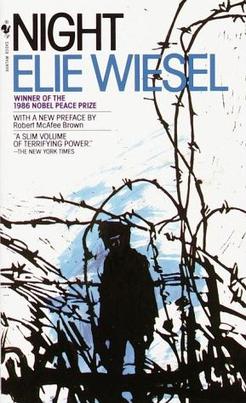
Night by Elie Wiesel
Read in 9th grade

 
2
Walk Two Moons by Sharon Creech
Read in 5th grade


3
To Kill a Mockingbird by Harper Lee
Read in 9th grade

 
4
1984 by George Orwell
Read in 12th grade


5
The Great Gatsby by F. Scott Fitzgerald
Read in 11th grade


6
A Separate Peace by John Knowles
Read in 10th grade


7
The Two Towers by J.R.R. Tolkien
Read in 10th grade


8
The Adventures of Huckleberry Finn by Mark Twain
Read in 11th grade


9
The Scarlet Letter by Nathaniel Hawthorne
Read in 11th grade


10

Macbeth by William Shakespeare
Read in 12th grade


Okay, so I only included one play, but I honestly just didn't read that many that really grabbed me. I am especially partial to the books in the top five; they had the biggest effect on me. Did you have to read any of these for school? Did you like/dislike any of them? Feel free to leave your list in the comments so I can take a look!

Friday, May 23, 2014

Realism, Romaticism, and Interpretations

Realism and romanticism - two different approaches to literature with their own individual quirks and perks. Of course, each reader has his or her own preference for one of the other or enjoys combinations of both. I fall into the latter category. I have a place in my heart for approaches, although I imagine I probably do have standards for each whether I realize it or not. However, I'm aware that I tend to read way more romanticized novels because they can be so magically fictionalized. "Unrealistic." My imagination is rather far-fetched, so just about any story will do as long as it's well-crafted and meets my standards for literature.
 
But lately, I've been noticing some things and have come to a few realizations. I think that someone's set preference can easily affect their opinions of a novel - I'm not just talking about if they don't like something, I'm talking about the why. But no one really talks about that.
 
Allow me to explain. I liked Stephenie Meyer's Twilight series even though there were quite a few that hated it. Like I said though, this discussion is all about the why. When people would talk about why they didn't like it, it oftentimes resulted in a full-blown discussion about how Bella was a weak character with an unnatural, unhealthy need to cling to her boyfriend. They spoke of anti-feminism scattered throughout the novel. I was utterly confused for a while (literally YEARS) because all the reasons they gave for disliking Bella sounded like reasons I would give for not liking a character.

So, this begged the question, why didn't I see what others saw in her even though the qualities they saw sounded awful to me? It took me such a long time to figure it out... But them BAM: Epiphany! I began thinking about New Moon, which probably made people the most irritated since it consisted of Bella feeling completely miserable over Edward leaving. And I understood something: If I read New Moon and took it all as realism, I would've thrown that book out of the window. But I didn't. I took it all as heavy romanticism. Why was Bella so miserable when Edward left? In the eyes of a realist, it was because all Bella wasn't independent and relied on her boyfriend in the worst way possible. In my romanticized eyes, it was like a fairytale where true love bound them together. The reason Bella was ever so drawn to Edward was because that magical concept of fate, where if you fight it, you're going to lose. It wasn't that she was independent because of a character flaw, it was because of that romanticized sense of fate.
 
Is it unrealistic? Yes. Stupid? Probably. But it's romanticism, and I think if people took it as lighthearted as possible, the way we took Cinderella when we were five, then more people would've liked it. I'm not saying that people have to be romanticists to any extent, I'm just saying people would have to in order to enjoy that particular series.

What someone takes from a book can be completely different from what someone else takes from it - this goes for realists, romanticists, and everything in between. I always use Cinderella for this example. Many view Cinderella's story as anti-feminist, that she relied on a man to "save" her, or whatever. My question is: How in God's name did the prince save her? If anything, the fairy godmother did. Still, one could argue that she relied on the prince for happiness, but once again, I think people give the prince too much credit. Marrying a prince wasn't the point; getting out of her horrible life situation was. But that's just my interpretation out of the millions of ways it could be interpreted. If we focus on the fairy godmother, Cinderella's theme could be "belief in a higher power can benefit your life." If we focus on how her social status shifts, it could be "if you live a hard life, there's light at the end of the tunnel." There doesn't always have to be one right answer when it comes to literature, and sometimes I think people forget about that. Sometimes, things are debatable. It all depends on the mindset of the reader.

But what do you think? How did you perceive characters like Bella Swan and Cinderella?