Showing posts with label review. Show all posts

Saturday, May 7, 2016

Sovran | Draconian

My experience with metal mostly lies in the symphonic realm, and I tend to just dabble in other metal subgenres. Hence, I haven't listened to much doom metal just yet. I've always known I must be bound to enjoy it since I love some of the doom influences in Tristania's older work, and I whole-heartedly adore Within Temptation's debut album Enter, which has often been thrown into the doom category. (In fact, Enter is what introduced me to grunts/growls in general, let alone "beauty and the beast" vocal contrasts.) Since Draconian is a female-fronted band that has appealed to symphonic fans, I heard a great deal about the release of their latest album Sovran, and I was intrigued. Doom metal with beauty and the beast vocal contrasts? Dark and complicated songs? A singer that sounds like Sharon den Adel? - Wait a minute, that's impossible: Only Sharon can sound like Sharon, right?

But, alas, I gave one of Sovran's singles a try and that led me to buying the album... Good Lord am I impressed - and I've been pretty nitpicky lately. Sovran is a masterpiece.

Let me give you the highlights of this musical discovery as it awaits your full attention. The first few times I heard the lead single single "Rivers Between Us," which features vocalist Daniel Änghede (Crippled Black Phoenix), I wasn't too impressed. I appreciated the band's overall sound but struggled to hear what was special about this collaboration at times, but it's grown on me quite a bit since those first few listens. The single (and gorgeous music video) that really grabbed my attention was "Stellar Tombs," with its wonderful chord progression in the chorus and intriguing lyrics. The final line, in which Heike is only accompanied by piano, always leaves me feeling a stange combination of hope and melancholy.

Since Sovran is my first and only Draconian experience, I cannot copmpare Heike to the band's previous singer. Heike Langhans does indeed sound similar to Sharon den Adel - apparently it's possible after all. When I heard the first track "Heavy Lies the Crown," as Heike sings "A haunted, starless sky, / Fragile and oh so deep / The dying softly wakes / And smiles in painless peace" I actually had to remind myself that I wasn't listening to Sharon. Her voice is so peaceful and light, but also haunting - a combination that usually only Sharon is the master of. Anders Jacobsson does all of the grunts/growls, and Heike's voice meshes so wonderfully with his deep voice. (Personally, I like hearing growls that are deeper than the higher-pitched scream/growl hybrid that some bands occasionally work into their music... Am I the only one who has this off-the-wall preference?) Perhpas the best example of their blend is about three quarters the way through "The Wretched Tide" (which has some of the most interesting riffs from Sovran), at the lines "So we're leaving today / As dust-ridden shutters close..." The section Heike sings that goes "Tired and cold / A tale since eons of old / So elusive this intemperance of escape..." is pure perfection - not only for her voice, the steady soaring top notes in the band's wonderful chaos, but the vocal line in general is genial.

Another highlight is "Pale Tortured Blue," my personal favorite. It's kind of ballad-like, for between the emotion in Heike's voice, the A+ chord progressions, and the somber violin section, it feels sadder than the other songs. The guitars at the end give me chills every time. I found a similar appeal in the middle eight of "Dishearten," and Jacobsson growls "we're too tired to sleep / and these bodies confound..." but towards the end, "Dishearten" ends up having one of the fastest tempos found on Sovran, and once again, Heike's voice steadily soars as the band jams on.

In truth, there isn't a single bad or boring song on this album. There isn't a bad lyric, either - all are so well-written, poetic, and thought-provoking. And structurally, each one is compelling and complex with chord progressions that are at once hair-raising and heart-melting. Even my least favorite, the album-closer "The Marraige of Attaris," has some seriously strong points in its solemn middle eight and its haunting ending: "So tired, so tired... / I need to feel the freezing blue / Leave me here! / Let the coming of spring / Carry me back to earth. / Leave me here!" After discovering the beauty of "Stellar Tombs" earlier this year, I knew this band was capable of making great music, but I never predicted loving Sovran this much. My mind is blown and my weave has been snatched.

Sunday, March 20, 2016

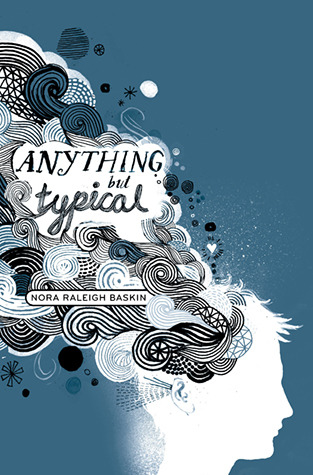
Anything But Typical | by: Nora Raleigh Baskin

Jason has autism. The world tends to overstimulate him and sometimes he can't control his movements. He doesn't say much, and that only seems to cause drama in a world that is constantly searching for a response. But that doesn't mean there's nothing in his head: Jason writes stories quite often, and he posts them to a website called Storyboard, where he meets a member named PhoenixBird. He thinks she might actually be his girlfriend... but in a world where even his mother struggles to understand him, how can he expect PhoenixBird to accept who he truly is? 

Anything But Typical is the second book I've read from someone on the autism spectrum's point of view (the first being Marcelo in the Real World by Francisco X. Stork, one of my favorite books of all time). Seeing the world through someone with this condition's perspective is of course intriguing and insightful, but simply as someone who enjoys writing and connecting with others through the Internet, I was immediately interested in this novel's premise. The idea itself is golden (as is this cover).

The execution? Not as much.

Don't get me wrong, Anything But Typical did not outright falter. I think Baskin did a pretty good job of showing readers what was going on in Jason's head as he interacts with the world and struggles to be the socially-superior person everyone wants him to be. I could feel his hopelessness and I often felt angry at how some of the adults around him would react - fictional adults who represent what happens all too often in real life. The teachers are not trained as well as they should be to work with him, his mother struggles to understand how her son can possibly feel anything when he is not very expressive, and his grandmother... Well, his grandmother doesn't understand much of anthing. I also thought it was good to see how Jason's stories reflect his views of himself in relation to the world around him, even if it does get borderline corny at some points.

However, the last quarter of the book just felt clunky, which is odd because I would have expected that issue to arise when Jason is flashing back to past times as the present story continues. But that element was done well enough. There is so much build up to the climax, but once we get there, it's a bit underwhelming and doesn't have a very good flow to it. Keep in mind I totally understand the need to have a 'realistic' ending that is not totally happy or totally miserable - I like that aspect of the book. (And really, that's what's accomplished in the book I mentioned earlier, Marcelo in the Real World.) But the pace was weird and one of the moments where he was daydreaming wasn't written in the clearest way.

Since I was so excited to read this book based on the premise, I have to say I'm a bit disappointed in how this one turned out. Genius idea, rocky execution. 

Friday, March 4, 2016

The Ocean at the End of the Lane | by: Neil Gaiman

So, you might have heard of Neil Gaiman. Dude's done pretty well for himself as a writer; basically everyone has heard he's great. Unfortunately, I have not read any of his books since Coraline when I was twelve despite the fact that I really enjoyed it. But when I had to read a couple of his short stories for a class about two years ago and The Ocean at the End of the Lane was released, I became quite curious. I had a feeling that it would be a good book.

Even though this is technically an adult book with an adult-aged protagonist, as the narrator returns to the lane he grew up on, he relives memories from his childhood, and those memories take precedence in this small novel. He returns to his neighbors, the Hempstocks and their farm, where he experienced mind-boggling, near-death experiences with his friend Lettie, who protected him from the monsters of other dimensions as they entered the world as us ordinary people know it. Memories fade with time, and some are simply unreliable, but going back to the place where such beautiful and horrible things occurred makes it all come back to the narrator.

To be honest, in the first half of this book I was a little unsure of how I felt about it. Even though the writing impressed me right off the bat and the general uniqueness of the monsters intrigued me, I felt it might be a little too far in left field for me to truly love. After all, some of these monsters are hard to fathom. I mean... A canvas? Really? And Ursula is the kind of antagonist bound to make readers' skin crawl. She bugged me. But I rolled with it all and was determined to give it a fair chance. It all had to be leading up to something, but I couldn't quite tell what it could be. 

I think the last 25% of the book is when I realized that I was completely in love with it despite any initial thoughts, because it certainly did lead up to something, and my God was it beautiful. I wasn't expecting something that seemed so creepy and quirky to end up being so gorgeous. If these are the types of feeling all of Gaiman's work leaves people with, then I need to buy the rest of his books ASAP. I can't stop thinking about it. The Hempstocks are so intriguing, as are the revelations our narrator had as a child. Childhood is important to our understanding of the world, even if we can't make sense of what we see.

The Ocean at the End of the Lane is full of imagination and beautiful passages that I just want to reread forever.

Thursday, February 25, 2016

Wonder | by: R.J. Palacio

People have been raving about R.J. Palacio's contemporary novel Wonder for a few years now. Sometimes it's categorized as young adult, but sometimes it's categorized as middle grade since the main character is in the fifth grade. It's enjoyed across either age group, and I'm sure even beyond because Wonder is a bit of a wonder.

August (Auggie) has a face that's very different than everyone else's. He's had correctional surgeries to improve upon his genetic misfortunes, but he's still what many would call "deformed." Since he's had so many complicated health issues between surgeries for most of his life, he's been home schooled - until now. He knows that fifth grade will be a struggle looking so different than everyone else, that not everyone will treat him well. But fortunately, he's in for some pleasant surprises amid some periods of strife.

It would be easy to anticipate Wonder being a little depressing, but as I said with Francisco X. Stork's Marcelo in the Real World, it ends up being quite lighthearted and serious all at once - hence, any age group will love it. Several moments made me smile, but quite a few had me damn near crying in public as I read. 

I became quite attached to the characters and plowed through the pages quickly, no matter who was narrating. I actually didn't expect multiple narrators at first; I just assumed that Wonder would only be Auggie's story. But Palacio shows us how he affected other people as well, including his protective older sister, his sister's boyfriend, and his friends. There are multiple sides to every story, everyone feels something different, and all these feelings seem so real and valid. Palacio didn't really make any of them perfect or evil - rather, she showed how complicated situations can be. Even though he only gets one section, I really loved the way Justin's section was written. It seems to show that there's moe than what meets the eye: At a quick glance, Justin apparently doesn't understand punctuation, but the words themselves are gorgeous.

As for the other characters? Of course, our protagonist Auggie is quite loveable and easy to sympathize with as he discovers the large spectrum of humanity in his fifth grade year. Summer always put a smile on my face as she consistently decides to choose her friendship with Auggie over all pressures, and Olivia is always sticking up for Auggie - oftentimes in rather blunt ways, which I found touching. These characters really care about one another; they warmed my heart.

I suppose that's Wonder in a nuthsell: Heartwarming. Sure, some moments will put a smile on readers' faces, others will spark sympathy, but altogether, I found this book rather touching. 

Sunday, February 7, 2016

Winter | by: Marissa Meyer

*It's probably not a good idea to read this review if you have not read Cinder, Scarlet, and Cress just in case of spoilers.

The end of 2015 was both exciting and sad in the bookish world since Marissa Meyer's Lunar Chronicles series reached its conclusion. This action-packed science fiction spin on Sailor Moon and fairytales is easily one of my favorite series of all time; I adored and devoured each book, and I expected this new installation to have a similar effect. So, did Winter meet those high expectations?

HECK YES IT DID. Even though it's over 800 pages, I couldn't put Winter down! The plot reached an all-time enormity and complexity as Cinder and her allies attempt to dethrone the malicious Lunar Queen Levana. Everyone is putting their lives at risk as they sneak onto the Moon and tell Lunar citizens of their plan. It's full of some intense moments - even more intense than the previous books in the series!

And of course, these characters are perfect. The girls are so badass! They all feel so real, and they're so funny as they interact - some are basically polar opposites in some senses, so that always makes things interesting. In my reviews of the previous books of the series, I've fangirled over basically all of the characters as they were followed more closely, and I still love all of them. Cinder, Scarlet, Cress, Iko, Kai, Wolf, Thorne... and of course the ships are just so cute in their own unique ways! Where all the characters end up by the final pages could not have been more satisfying.

But even though Winter is the last book in the series, we get to spend time with some characters who weren't as prominent before. Now Princess Winter is on their revolutionary team, and her love interest Jacin takes on a more prominent role as he strives to protect her from both Queen Levana and herself. I love them just as much as the rest of the allies. Winter embodies the idea of Snow White being pure and innocent in both old forms (her connection to animals, her indisputable beauty) and new forms (she isn't white - her skin is actually quite dark - and she refuses to use her Lunar gift because she values the truth over her own health). I love that Marissa Meyer created a character whose flaws enhance her beauty: Winter may be crazy, but she's harmless and sweet, and she may have scars on her face, but not even scars could make such a lovely person less pretty. Even though Winter's mental health is suffering, she makes herself quite useful as a revolutionary. She's not weak.

One ongoing theme in this series is that it's not so much about beauty or lack thereof, it's about how you use what you've got, it's about the heart and its intentions, and Meyer really drives this point home in Winter. Overall, I think this conclusion is basically perfect. Everything is wrapped up quite nicely... It's difficult not to spoil anything, and I feel like I'm not saying much in this review, but honestly, what more can I say? It was fantastic. I had so much fun reading each and every Lunar Chronicles book, so even though Winter wraps things up nicely, I'm a little sad to say goodbye. Someday, I'll have to reread these lovely books.

Thursday, January 21, 2016

Fairest | by: Marissa Meyer

Between the third and fourth novels of the fairytale- and Sailor Moon-based Lunar Chronicles series, Marissa Meyer treated fans to a prequel about the series' villain, Queen Levana: Fairest. This short novel begins with the assassination of Levana's parents and shows the evolution of her character in the events following that particular episode. It provides a great deal of insight not only about Levana, but her family in general - especially her sister Channary. It even answers the question all Lunar Chronicles fans have been asking - what does Levana really look like under the glamour, under the veil?

I must admit that despite being a huge fan of the Lunar Chronicles series, I wasn't excited for Fairest. Why? Well, it seems like most villains' stories follow the same structure: The started out (mostly) normal, something bad happened that isn't entirely uncommon in the grand scheme of terrible things that can happen even in the real world, and they were so affected by what happened that they turn into a bit of a psychopath even if you can't quite understand their rationales.

I suppose I forgot for a hot minute that Marissa Meyer knows what she's doing and underestimated her ability to paint this character's picture. Fairest is actually really good and it breaks the pattern I mentioned before. If Levana's pattern of development could be labeled, it be something like this: She started out crazy as her whole family was batshit crazy to begin with, and in baby steps she just got crazier and crazier. Furthermore, the ONE THING that happened to her (I refuse to spoil) just does not generally happen to people. This girl's circumstances are just... Messed up. She's messed up. And her sister Channary? She is absolutely insane. I feel like I have a whole new understanding of this family after reading Fairest. Levana's deep attachment to Sybil is also explained.

This prequel also provides a bit of insight on exactly who Winter is and what her upbringing was like. It was fun to see cameo appearances of the heroes we've read about in the series as children. Winter, Jacin, and Cinder playing together - isn't that adorable? Well, until that thing that happens that we all know about from the first novel, Cinder. Plus, I really liked Evret and Solstice... The way that Levana treated Evret really enforced how Levana is such a psycho that she doesn't even realize it. From her perspective, she's not quite as manipulative as she actually is.

So, even though I originally thought that Levana's history wouldn't be as exiting to read about, I liked Fairest a lot. I plowed through this quick read in one day, curious to discover more about this villain's past and how it formed her future. Now that I know Levana's whole story, I am prepared for the series' monstrous 800-page conclusion, Winter... but I still don't want the Lunar Chronicles to end!

Monday, January 11, 2016

Art Angels | Grimes

I love Grimes. Need I say more?

Yeah, I should probably say more. I fell in love with Grimes' dreamy electronic music just last summer (specifically her album Visions), and this fall she released her fourth album, Art Angels. This new piece of art is a departure from Grimes' older material in a number of ways. While the production of her previous albums did not bother me, Art Angels is so much cleaner. Claire Boucher (that's Grimes' real name) likes to make her albums by herself - not only the writing, but also the artwork, production... she just kind of does everything, and while that was always admirable, seeing her improve so much in only a few years is even more exciting. We can make direct comparisons with the fan-favorite song "REALiTi," which was released as a demo earlier last year and re-worked for Art Angels. I may still prefer listening to the demo simply because it's more mellow, while the new, crisp version has more energy in it. Still, the production quality has improved - that is indisputable.

In an article by Emilie Friedlander at The Fader, it was noted that Grimes performed all of the instruments - and she uses real ones in addition to synths now, and that has changed the flow a bit and allowed for more diversity among the tracks. There are actually a number of guitar-led songs on this album. The other big change we see on Art Angels... Well, the songs simply have a different feel than her earlier work. In that same Fader article I mentioned earlier, Grimes explained that much of her music sounded "sad," before but "this time it’s more happy and angry." That seems to sum up the change perfectly. In fact, there are some tracks that sound both happy and angry at the same time. I listen to her previous albums when I embrace weakness, but I listen to Art Angels when I want to be strong. Hence, while it's a little easier for me to appreciate the darker tones of Visions, Art Angels is a very special album to me. 

Grimes has made some really relaxing music all across her discography, and this album is no different. Songs like "California," "Belly of the Beat," "Easily," and "Butterfly" sound like a sunny, laid-back summer day. This certainly isn't sad Grimes - this is a carefree Grimes that uses guitars and a piano in addition to her synths to give us more of a raw feel (but less so with "Butterfly," which I feel will appeal to fans of "Genesis"). Carefree Grimes can still make some jabs at haters, but anyone who has heard the lead single "Flesh without Blood" would know that with lyrics like "After all, I just don't like you." Perhaps on the first listen it might sound happy and fluffy, but I think empowering is the better word. Hearing the line "If you don't need me, just let me go" is like a therapy session.

However, as Grimes promised, we get to feel the rage too - the angrier songs are the most energetic of her entire discography. The most aggressive track (and one of the most experimental) must be "SCREAM," which features the Taiwanese rapper Aristophanes. As I mentioned in my 2015 singles countdown, this song is CRAZY. Grimes screams her head off as Aristphanes makes growly noises... It's kind of scary, and the electric guitar instrumental sounds appropriate for an Underworld film. But the other two more energetic tracks, "Kill V. Maim" and "Venus Fly" (which features Janelle Monae), are more electronic-based and, well, not scary. Grimes is basically cheering in the pre-chorus and chorus of "Kill V. Maim," and I especially enjoy the spacey intro and outro of this one. However, the Janelle Monae collaboration, "Venus Fly," may win the trophy for the most energetic track of the bunch. The high-pitched electronic breakdowns are flawless and easy to jump around/dance crazily to. Janelle and Grimes are sassy and confrontational as all get out, and I love it.

My favorite track is different than much of the other songs - "World Princess Part II." I recommend every fan of Grimes' previous albums that might be hesitant to embrace her new material to start with this one. It has everything I love about both Visions and Art Angels. Instrumentally, it sounds almost like a video game - it's that perfect combination of darkness and lightheartedness that only Grimes can create. It's an epic of sorts. The accompanying lyrics are bound to make any listener feel powerful, especially as she repeatedly declares "It's mine." However, the outro seems to lead the World Princess' tale of strength to the end of her reign, recalling the feel of Grimes' older material. The music dwindles as Grimes'  haunting backing vocals come to the forefront: "I stare into the darkness / I don't know where I am / I haven't seen the daylight since I thought of giving in / My eyes are feeling heavy, my feet are moving slow..." The only other blatantly sad moment on this album comes in the form of "Life in the Vivid Dream," which quite memorable despite being only a minute and a  half long. This song is the most acoustic of Grimes' material and may be one of the easiest for fans of most genres to like, not only because it is simple, but because it's emotional and easy to relate to.

Out of all the albums released in 2015 that I listened to in full, Art Angels is probably my favorite. I love every song - even the ones that didn't originally stand out to me on the first listen would be put on repeat later. Art Angels is definitely the most 'normal' sounding album by Grimes and is more accessible to mainstream-loving listeners, but it's still experimental, it's still genuine... It's Grimes. It's brilliant.

Wednesday, January 6, 2016

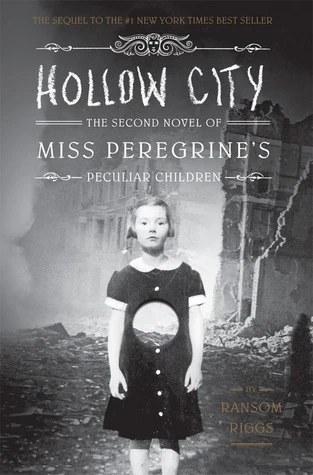
Hollow City | by: Ransom Riggs

*This review will likely contain spoilers for those who have not read Miss Peregrine's Home for Peculiar Children.

Hollow City is the second installment in Ransom Riggs' Miss Peregrine's Peculiar Children trilogy, which fuses strange vintage photographs into the reading experience. Jacob and his peculiar new friends are on an urgent and dangerous mission: They must find a way to help Miss Peregrine return to her human form, and quickly - but that isn't the easiest things to do in 1940s Britain. The Nazi army keeps dropping bombs as monstrous hollow and wights chase after the children. As they move along their journey, they have to make decisions concerning their ethical standards, and ultimately, what they are willing to fight for.

Despite the fact that Miss Peregrine's Home for Peculiar Children really impressed me when I read it years ago as well as when I reread it earlier this year,  Hollow City wasn't as easy to appreciate. I read the beginning and ending rather quickly, but the middle took a while for a few different reasons. To be completely honest... I guess I just didn't expect this entire book to deal with trying to save Miss Peregrine. I guess I thought that would take one third of the book and then the plot would get bigger. So there's one issue. And I will freely admit that by the time I reached the halfway mark I was at an exciting time in my personal life that made this novel seem a little dull by comparison (and I think this is the first time in my whole life I can say this lovely phenomena has happened). But perhaps the most prevailing issue is that despite the singular plot goal, I just didn't feel like all the obstacles the children faced truly tied together. It felt less like plotting and more like 'let's put in obstacles to make the book longer' at times. Placing so many moments where Jacob reflects on how everything is so crazy compared to his old life also gave me this vibe.

However, I did not dislike the book overall - my feelings are generally mixed. It certainly had some good qualities. Once again I appreciated the use of old photographs to enhance the story and the fact that it takes place in the dark WWII-era Britain, and even though Jacob and Emma's romance was underplayed in many respects, I liked that Riggs kept it innocent and fluffy. Plus, I think all the abilities are really cool - especially the ones that Emma, Althea, and Olive have. Even aside from their peculiar abilities, some of the characters warm my heart... Olive is just the sweetest thing and I love how motherly Bronwyn is with her friends!

But what truly made me like this book better by the time I reached the end are the twists. A few things are either discovered or occur that I never saw coming - I gasped at a couple moments. And the cliffhanger! It was a bit of a frustrating place to leave us hanging, but I thing Riggs built a solid foundation for the trilogy's conclusion, Library of Souls, which just came out this year. I anticipate that it will be the most action-packed of the series if this is going where I think it's going.

Hollow City, in short, has some prominent good points and prominent not-so-good points. I wish I could have liked it as much as the first installment of Miss Peregrine's Peculiar Children, but I'm hopeful for the next book, Library of Souls.

Wednesday, December 2, 2015

Hate List | by: Jennifer Brown

Valerie must go back to school, and she's dreading it. At the end of last school year, her boyfriend Nick killed himself and other students. Survivors deal with painful injuries both inside and out. All of the victims were on the "hate list" which he wrote with Valerie beforehand. Now that everyone knows that Valerie contributed to the list, people blame her, but she had no idea what Nick's true intentions were. He was the one person she thought understood her, but in the end he flipped her world upside down and left. Between all of that and problems at home, Valerie has a lot on her plate, and she doesn't know how to establish a sense of normalcy. 

Obviously Hate List has a lot going for it. That premise is intense, and honestly, when I read about the general gist I immediately thought that it would be too much. Too dramatic... Or maybe just trying to hard to be too dramatic. I was required to read this for a class, and I wouldn't have picked it up otherwise.

While it didn't exactly resonate with me, Hate List wasn't nearly as melodramatic as I expected. I was intrigued and emotionally invested in a moderate way, and I can say that I generally liked it. John Green talked about how we romanticize the dead's previous struggles in The Fault in Our Stars, and Jennifer Brown talks about how we romantice the living's grieving processes. Grief is ugly. And some ugly souls are unaltered even after tragedy. Nothing can completely suck the ugliness out of us, whether we want to admit it or not. Valerie realizes this when she goes back to school: Not much changed since the shooting. But some people did.

Brown seems to form her characters to be real people with a mix of good and bad qualities rather than being walking epitomes, and while that's always ideal, I think it's especially crucial for such a 'real' story. She also does an exceptional job of describing emotions. While no one I have ever known has shot anybody, I have been disappointed. I have missed people and felt disappointed in the at the same time, like Valerie feels about Nick - even though this book has a really extreme premise it has relatable moments. I got a few tears in my eyes off and on.

I guess there's nothing really bad about Hate List, but... I don't know. I guess I just wish the plot was stronger. The most intense moments were usually the flahsbacks, and what happens in the present is interesting, but I just feel like there could have been more... together? The execution of the overall story wasn't bad, the writing wasn't bad, the charactes were honest, there were some emotional, relatable moments... Even though I can say I enjoyed it there's something that keeps me from saying I REALLY liked it, and I'm not 100% sure what it is. Maybe despite everything it's just not my type of book?

Hate List has a lot of positive points, I'll give it that. But I just didn't love it even though I struggle to put my finger on why.

Saturday, November 21, 2015

The Hunger Games: Mockingjay, Part 2 | Directed by Francis Lawrence | Screenplay by Danny Strong and Peter Craig

This review will contain spoilers for those who have not seen the previous movies/read the books.

Mockingjay Part 2 set the box office on fire this past weekend. Fans who read Suzanne Collins' books knew exactly how depressing this film could be... Personally, I dreaded watching it because of how the book impacted me: I cried so hard I vomited. Yes, vomited. I just wasn't prepared for all the sadness, and I brought a whole box of tissues to the theater just in case.

Even the overall premise kind of hints that this movie isn't going to be the happiest. Katniss Everdeen has been through hell in back a number of times, all because of President Snow's violent leadership. As the rebel forces gain strength, Katniss knows that the war will not end until Snow is dead. Peeta struggles to recover from his capture as he and the rest of Katniss' squad tries to make it through the Capitol (which has been filled with deadly traps) to reach Snow. All the while, they realize the true costs of war - not just for themselves and the rebels, but for the Capitol as well. Will all the pain and suffering of Panem lead to an era of peace, or will it all be for nothing?

Despite the bleak premise and the gut-wrenching events that occur... I only used one tissue during this film. Some of the heartbreaking things that happen (particularly THE event - those who have read the book know what I'm talking about) were really underplayed. Not on the actors' parts - the screenplay itself doesn't give some moments the right amount of face time to truly impact audiences in an extreme way. Part of me is disappointed that this happened, another part understands in the context of what the film was trying to achieve, and another part is just flat out relieved that I didn't have to go through the whole emotional turmoil that I endured when reading the book again. But that moment when Jennifer Lawrence is screaming at Prim's cat... Oh my God, she did it perfectly. Out of all the film's events, that one struck me the hardest. She's such a great actress.

Mockingjay definitely sends some strong anti-war messages, and I think that's what will resonate with people the most. When it comes to wars and worldly conflict it often seems society picks and chooses who to care about and struggles to sympathize at times. Mockingjay sympathizes with everyone harmed in conflict - rebels, civilians of the Capitol, and those suffering from post-traumatic stress disorder (Katniss, Peeta, Annie... well, most of the characters, to be frank). This story resonates with people because it isn't afraid of showing how broken we can be and because it's relevant in some ways. The again, that goes for all the installments, not just this one, but the conclusion is where the bigger picture is considered the most.

Even though I have mixed feelings about how some events were presented, Mockingjay Part 2 was one hell of a movie regardless. There's a ton of action, a heavy dose of ethics, and feels - all amid a great score by James Newton  Howard and some on-point portrayals. It seems like a lot of people like to hate on Josh Hutcherson's acting, but I honestly enjoyed his portrayal of Peeta. People also seem to dislike Liam Hemsworth's portrayal of Gale, but I think a lot of the issues connecting with Gale in the films comes from a lack of face time. As a fan of Suzanne Collins' books since 2010 I must say I'm happy with how the films turned out overall.

Saturday, November 7, 2015

Every Day | by: David Levithan

After hearing so many rave reviews of his work, I have finally read my first David Levithan novel, Every Day.

I was both intrigued by and weary of Every Day's premise when I first read it. It's about a soul named A who wakes up in a different body every day... interesting as that sounds I was worried A's situation might feel a little hopeless, and while it certainly seems that way for much of the story, I did not feel overwhelmed.  (The primary exception is when reading about Kelsea, the clinically depressed teenager A inhabits for a day.) Levithan leaves us in a cloud of uncertainty at the end but not without hope, and that seems to be the best note to end on for this type of book.

As A moves from body to body, life to life, Levithan examines a lot of different lifestyles and circumstances and demonstrates sympathy for a wide range of people. The examination of different types of people is actually one of the greatest strengths of this novel. Even though some of the personalities are arguably a little cliche, that does not mean that they don't exist, and I think his goal was to show extremes anyhow. Still, this story emphasizes how similar we are despite external differences. Once A finds his love interest Rhiannon, her inability to feel the same way about him as he switches bodies is both frustrating and understandable. We judge by appearance all the time, and I don't think we realize exactly how annoying this can be until we hear from a being who has no appearance.

The writing style is consistently gorgeous - Every Day is a book filled with great quotes to like on Goodreads. There are passages that perfectly sum up humanity's strange intolerance, and there are passages that describe love better than most literature I've read, because Levithan does not care if the truth sounds far-fetched and romanticized. It's reminiscent of T.S. Eliot's poem "The Love Song of J. Alfred Prufrock" - "Do I dare disturb the universe?" - a line that has always been spot on with me. Both positive and negative relationships are explored, and I think everyone understands either what it's like to be in Rhiannon's position in regards to Justin or what it's like to know someone special who insists on staying in shitty relationships.

Every Day is certainly an intriguing and memorable novel. I've never encountered anything quite like it before. It may fall a bit short of being a new favorite, but it got me thinking, and I'm pretty sure that was Levithan's goal with this book anyway.

Saturday, October 10, 2015

Visions | Grimes

Some albums have this wonderful ability to make you completely obsessed with an artist's music and can be repeated several times without ceasing to impress. Visions is one of those albums. It's the third LP from the ever-so-unique electronic artist Grimes (born Claire Boucher), who caught my attention when I saw her open for a Lana Del Rey show last summer. I bought a copy of Visions only a couple weeks later, and gradually, I fell in love with basically every track.

The little introductory song "Infinite Love Without Fulfilment" kicks off the album in such a generally happy way, contrasting with the cover, as it looks like it could be the cover of an angsty punk band with the skull in the center. The girly, light vocals are heavily layered, and eventually the song becomes more mysterious, hypnotic. It's strange, kind of cute, kind of dark... I guess that's Grimes in a nutshell.

This leads us to "Genesis," the first full track, which is infused with echoey synths that initially made me visualize an underwater setting. The repetitive lyrics are as beautiful as the instrumentation, which just builds and builds as it goes. Eventually harps and a piano are added in the electronic mix, and it feels so lighthearted and beautiful... "Genesis" is the sound a soul makes when someone is so happy they could cry, it's the sound a heart makes when it flutters. I've never heard anything like this, and I've never run into a song that makes me feel like this. Grimes' trademark girlish vocals are the perfect fit for the pretty instrumentation. I get chills just about every time she ends with "I am the one in love" and her backing vocals layer and fade, leaving us with one last snippet of the echoing keyboard. Even though it took me a little while to truly hear "Genesis" for what it is, it is my favorite Grimes song.

"Oblivion" follows, and it's another of the seemingly examples of how Grimes can make certain aspects of a song that are repetitive not even feel repetitive because she keeps adding new interesting layers of instrumentation and vocals. The music itself is a lovely combination of dark and bubbly, but those lyrics are more intense than one would expect as Grimes tackles the concept of assault and its aftermath: "I will wait forever / Always looking straight / Thinking, counting all the hours you wait." She repeats "See you on a dark night" as the music climaxes.

These singles from Visions feel very peaceful, but that calm bubble is burst with track four's mere power. "Eight" is one of the craziest things I've ever heard in my life. It sounds like an alien invasion. The deep synthesized vocals that repeat throughout the entire song clash with Grimes' pitched voice (and considering how light her voice is without being pitched... well, it's high) to create something chaotic, but once we hear her normal voice it takes the edge off without killing the song's level of oddness. I always have to dance along when I hear this one and the song that follows, "Circumambient," in all of its darkness and catchiness, as it was the first Grimes song to stand out to me. Before we reach the second half of the album we hear "Vowels = Time and Space," which sounds bright enough to be a slowed down Aqua song.

"Visiting Statues" is like a short interlude marking the midpoint, an intermission of sorts, but it definitely stands out on its own with its light instrumentation in the spotlight. The only vocals prominent seem to mainly be backing vocals, giving the track an atmospheric feel - it's peaceful, perfect background music for writing. This song leads into "Be a Body (侘寂)," another standout with its fleeting electronic spurts and pretty, empowering lyrics: "I close my eyes until I see / I don't need hands to touch me / Be a body." The second repetition of those lyrics constitutes the part that truly made me fall in love with this song with its dark, pulsating instrumentation. The music becomes darker still with "Colour of Moonlight (Antiochus)" with its prominent percussion and the instrumentation's gorgeous melodies. It's one of the calmest, ballad-like songs from Visions, and I sway every time I hear it.

The album continues to feel peaceful and relaxing with "Symphonia IX (My Wait is U)," but then things get a little chaotic with the masterpiece "Nightmusic," which is a very fitting title. In all of Grimes' music it's sometimes difficult to understand what she's saying (especially since she never released official lyrics to her songs), but "Nightmusic" owns that element. After multiple listens (forwards and reversed), I've reached the conclusion that while some of the vocals are indeed reversed and one portion actually does seem to be regular English ("Tonight's the night, I waited 'til the end" etc.), much of it is just gibberish - she truly lets us see the depths of insanity and it sounds wonderful. The synth part in the middle just before and during the regular English section is truly the climax, and as great as it is on Visions, it's even better live with new percussion and harmonies. "Nightmusic" is without a doubt one of Grimes' best.

The final full song before we reach the album's outro is "Skin," with its muted instrumentation. It took me a while to give this song a full chance since Grimes' voice is almost unbearably light in the beginning, but she slowly comes down to a more normal level during the first verse. Instrumentally it depicts loneliness very well, and lyrically... This song resonated with me on a very emotional level. The best part impresses me every time I hear it: "And you can't, and you can't, see the wind in the trees / And you can't, and you can't, see the wind in the leaves / And you can't, and you can't, see the weight in the dark / And you can't, and you can't see the weight in the heart."

"Know the Way (Outro)" kind of reminds us that we probably know the way to leave Visions and come back to reality even if we don't want to... I didn't want to. Grimes created a whole other world with this album and I love every moment of it. It's this perfect combination of light and dark, and even when I can't understand a word she's saying, the songs still manage to resonate with me. There are so many layers in her music, so there are so many ways to love it. And even though Boucher's voice is so unique and memorable, she never makes it the spotlight: It's another instrument in her wonderful sound collage.

No one else sounds like Grimes and artists rarely release albums as creative and good as Visions. By now I have I have become a huge fan, and I anxiously await her next LP, which is to be released as a surprise sometime this month. Until then, Visions will continue to be replayed.

Wednesday, September 30, 2015

Imperfect Birds | by: Anne Lamott

Imperfect Birds is the third book of Anne Lamott's contemporary Rosie Ferguson series, which I have not read with the exception of this latest installment. (It's one of those series you an jump in at any time.) I don't think I would have ever picked this up (or even knew it existed) if it wasn't required for one of my university classes which examines adolescent feelings and behavior even though Imperfect Birds is technically an adult book, for it tells the story of teenage Rosie as well as that of her parents while she spirals out of control. Rosie lies, steals, and takes drugs - and she is able to manipulate her mother Elizabeth for much of the ride. Elizabeth must confront some of her own emotional problems and find a way to stand up to her daughter before it's too late.

Imperfect Birds tries to tackle some big topics. Much like with any dramatic soap opera, it'll hold your attention whether you like it or not... The only problem is that it's just not very good. It's odd, really: Once in a while Lamott will have a line that I find exceptionally creative and truthful, but a number of my issues stemmed from the way it was written, the ways she chooses to tell the story. Much of the dialogue felt unrealistically descriptive, and once in a while she'd try to throw in teenage slang and it just didn't reflect how teens talk. It was awkward. (To provide a comparison, I think John Green replicates teen slang perfectly.) Plus, some descriptions in general were just awkward.

One thing I noticed right away is that there is no strategic reveal of character traits - we are told what each and every character is like from the get-go, leaving readers with little to figure out on our own and giving us a very slow start. (I feel like this would have been even more irritating if I read the previous books in the series.) The characters are not likable in any sense, but they aren't supposed to be. Unfortunately, though, it makes them easier to be frustrated with them than sympathetic - especially since I couldn't relate to much of any of them. They're all so troubled in their own ways, and as they mix and mingle they each become even more troubled. There's a lot of drama within these pages. But it also became apparent as I was reading that Lamott likes writing about little moments. This would be fine if it wasn't all she liked to write. Some of the biggest events of the plot that would surely contain a lot of drama are glossed over, skipped... I don't think I've ever read a book where this happened regularly.

The ending does not have the clearest of resolutions, which generally does not bother me as we are left with hopeful clues that Rosie will be okay with time. (Most of the time when books don't have clear resolutions we can figure it out or know enough to sort of formulate a couple different potential endings anyway.) However... this book just ended so abruptly. I don't mind it in terms of the resolution itself and wondering what may happen, but the exact placement just felt so off, like she would have at least needed a couple more paragraphs. It felt as though the story dropped off in the middle of a moment, but not in a strategic way at all.

Overall I just didn't feel like Imperfect Birds was very good. While it deals with some tough topics and there's enough overall drama to stay interested, the characters and the execution of the story just didn't win me over in the slightest.

Tuesday, September 22, 2015

Blue Pool EP | Vanessa Carlton

Much of the world has forgotten about singer-songwriter Vanessa Carlton, who momentarily took over the world with the singles "A Thousand Miles" and "Ordinary Day" from her debut Be Not Nobody. "A Thousand Miles" can still be heard on the radio regularly, but for whatever odd reason, not a lot of people decided to stick with her. However, I am proud to say that I have not stopped paying attention to her in the past thirteen years. I have always been in love with her sophomore effort, Harmonium, and enjoyed some songs from Heroes and Thieves and Rabbits on the Run. Recently she has released the Blue Pool EP, a precoursor to her full-length album Liberman, which is scheduled for release on October 23.

Between Carlton's initial sound on Be Not Nobody and the popularity of other female singer-songwriters in the early 2000s, she fit in the mainstream music scene pretty well. Now, she fits into the indie scene, and frankly, I love it. Her music has held onto its reliance on piano and its peacefulness, but it has certainly evolved over the past thirteen years, and in my opinion, she's shown improvement.

The Blue Pool EP starts off with "Take it Easy," which begins with subtle synths before acoustic guitars and Carlton's light voice start to take their soothing toll on listeners. It's lovely and peaceful, but overall leaves the least amount of an impression on me. "Blue Pool," on the other hand, is without a doubt one of the best singles released this year. It's a perfect combination of dark and light, of loneliness and adventure, of cold and warm, and of newness and nostalgia. I often sing along to the lyrics to the chorus since they're so pretty: "'Cause the garden walls grow quick / Before you know you're outside of it / And the ivy's coming in / It's so beautiful if you can find it." The outro will leave listeners in a daze, for that final piano section is so gorgeous and dreamy. Carlton achieved perfection with this song, and I don't think I've loved a song by her so much since Harmonium.

The last two tracks on the EP are live living room sessions of brand new songs, "Operator" and "Nothing Where Something Used to Be." "Operator" immediately became a favorite alongside "Blue Pool." All it consists of is Carlton and her piano (in the living room), and that's all it needs. She sounds exactly the same as she does in her studio recordings, and sometimes when I listen to these living room sessions I forget they're live. The piano part is wonderful from start to finish, and lyrically, Carlton considers running away with someone: "Leave your house for a home." "Nothing Where Something Used to Be" is also quite beautiful, and there's something cozy about it that makes me think of winter.

Carlton's Blue Pool EP is a very tantalizing teaser for what's to come - overall I enjoy this direction more so than her work on Heroes and Thieves and Rabbits on the Run, and I hope I can say this again in October when we get Liberman. She's an artist that stays true to herself as she naturally evolves, and this mini release has some of her best pieces yet.

Wednesday, September 2, 2015

Kings and Queens | Leah

Leah McHenry is one of the few solo artists of the symphonic and Celtic metal world, and she is known for being on the more soothing side of this genre's spectrum. I was swept away by the ballads on her little album Otherworld, and was thus excited for Kings and Queens, the next chapter of her discography.

The first track, "Arcadia," undoubtedly stands out as one of the best of the album. A male-dominated choir echoes in the beginning before catchy and intense guitar riffs blend with the choral vocals. This is definitely heavier than the material on Otherworld, but Leah's voice sticks to its softer quality and this general change prevails on most of the album. The intro, post-chorus, and middle eight are show-stoppers in their own right, with the intro and post-chorus being quite heavy and the middle eight being very epic and flowy as Leah's light voice soars: "A shining golden citadel, upon a hill / No empire shall overcome / Dreams never to be forgotten."

Kings and Queens gets even heavier (and darker) yet with "Save the World," and it's easy to hear the Eastern influences in this song, sort of like in Epica's music. There's a good chunk of double bass after the chorus (and I'm a sucker for some intense double bass) as Leah vocalizes a bit in the background - it's basically a moment of symphonic metal perfection. The chaotic beginning of  "Palace of Dreams" has a similar atmosphere, but unfortunately I can't love the rest of the song as much, until it abruptly ends in the same style it began... But that transition probably could have been much better.

Since Otherworld was such a mellow album I guess I didn't expect so many great guitar riffs from Leah, but there ended up being plenty of examples on Kings and Queens amid some of the more delicate sounds she mastered on Otherworld. Her first single, "Enter the Highlands," includes some of the heaviest riffs, and they aren't instantaneously catchy, but I mean that in a good way. I mean that in a "Requiem for the Indifferent" sort of way: It's kind of complicated and took a while to grow on me. Leah's going beyond the basic form. Yet, at some point, her vocal lines from this song kept getting stuck in my head; I especially struggle to get the multi-layered chanting out of my head: "Souls... souls... souls..." Leah's voice is also layered like a choir in "Remnant" and weaves with the guitars most memorably, and this one is also no stranger to great riffs amid synths.

Even though Kings and Queens takes on a heavier approach compared to Otherworld, Leah still makes room for softer moments. "Hourglass" and the acoustic version of the English-Irish ballad "SiĂºil a RĂºn" are rather beautiful, with "SiĂºil a RĂºn" being one of my favorites. As mentioned before, Leah loves her world influences, and I love how she weaves them into her music - especially this song. Kings and Queens features both an acoustic version of "SiĂºil a RĂºn" and a rock version, of which I prefer the acoustic version. Leah experiments with different cultural sounds most notably in "In the Palm of Your Hand" and "The Crown," but neither of those really stood out to me.

But the thing with Kings and Queens is that it's honestly taken FOREVER to grow on me. It seems that in every song I don't particularly like right away, I fall in love with one or two sections and before I know it I'm jamming to the entire track from start to finish. In fact, it's happened with almost all of the songs I've mentioned so far, save "Arcadia." Currently this seems to be happening with "Angel Fell" - that echoey harpsichord-type instrument is so haunting and that post-chorus is purely amazing; I bob my head every single time I hear it. So even though I may not love every single track at the moment, who knows what I'll think of them by the end of the year.

The point is that Leah McHenry has created an altogether impressive symphonic metal album. It isn't quite perfect, but any patient listener who appreciates musical complexity will find that there are some killer tracks on Kings and Queens. It surprises me how incredibly underrated she still is within this community - it's not like the fanbase of this subgenere is a stranger to underground music. (Plus, members of Delain worked on this album, so that should at least make their growing fanbase curious.) But once people stumble upon Kings and Queens, I'm sure they'll understand the appeal. Leah's got skills.

Sunday, August 23, 2015

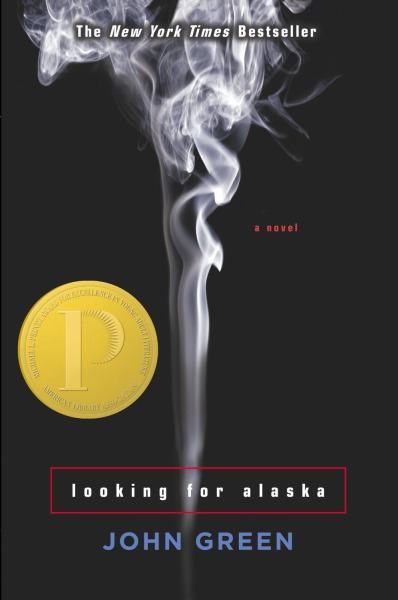
Looking for Alaska | by: John Green

Despite my deep love for the first John Green book I'd ever read, The Fault in Our Stars, it has taken me a few years before even getting my hands on a copy of Looking for Alaska. I tend to avoid situations in which tears are inevitable, and based on what I'd heard about Looking for Alaska, it sounded like tears would be inevitable.

This assumption was proven correct.

I'm sure most people - even the ones that haven't read it - have a general idea of what this book is about due to its massive success and critical acclaim. Pudge (his real name is Miles) narrates the story starting when he first leaves for boarding school. His life hadn't been particularly exciting before and he's hoping to change that in this new setting filled with new people. He joins a group of eccentric and adventurous friends, one of them being Alaska Young, who he may or may not be in love with. She's mysterious, moody, yet full of life, and she's about to change Pudge forever - some ways are intentional, others are not.

Pudge got way more than he asked for... He got what no one would ever ask for. But I loved reading about him and his group of friends. I loved Takumi, and Pudge and the Colonel's friendship was demonstrated so honestly and perfectly. It was so beautiful and sad to see how they'd need each other as the story progressed. But part of the reason they're all so great to read about is that John Green didn't try to make any of them 100% likeable. They're all flawed in some way or another - even aside from Alaska - and that made them more lifelike. Anyone who is going to connect with any of these characters will connect on a deep level because of it. Furthermore, I was just as confused about Alaska as the rest of the characters, and that made it all the more important in making me want to find out what exactly happened to her and what she was feeling.

And of course, John Green's writing is just flawless. Despite the wonderful characterization, the intriguing and easy-to-relate-to themes, his books wouldn't be as amazing as they are if he wasn't so damn great with words. There are a lot of beautiful passages in Looking for Alaska, but that last paragraph has to be one of my favorites in all of literature. Not only does everything he writes sound beautiful, but it's filled with these gut-wrenching emotions that readers can't help but feel along with the characters. I cried - granted, I only cried about 10% as much as I did when reading The Fault in Our Stars, but still. Green's words on forgiveness, loss, and guilt truly resonated with me, and even the quotes he chose to weave into the story were beautiful and perfectly matched... I think I picked an appropriate time in my life to read this, if I'm being honest.

But I doubt that anything I'm saying is any different than what everyone else has said about this one. The entire Internet told me that Looking for Alaska was brilliant, and it was. Once again, John Green got me right in the feels and left me thinking about his characters days after I finished the book. Damn that genius.

Tuesday, August 4, 2015

Fire and Ashes EP | Xandria

After impressing much of the symphonic metal community with their still-recent release Sacrificium, Xandria has decided to release a short EP, Fire and Ashes. Personally, I wasn't the craziest about Sacrificium: While Dianne van Giersbergen's voice is stunning and the instrumentation is epic, overall I simply felt that too many songs blended together. Still, I was curious to see if I'd enjoy any songs from this new EP.
 
Fire and Ashes opens with three brand new tracks: "Voyage of the Fallen," "Unembraced," and "In Remembrance." "Voyage of the Fallen" is the lead single, and like many of the tracks from Sacrificium, the instrumentation is epic, but overall it just doesn't spark much affection from me. The chorus is nice and bombastic, reminiscent of old Nightwish, but it's not a track I'd revisit.
 
However, the other two new songs left me totally impressed. "Unembraced" begins with a beautiful fast-paced piano part that reminds me of the song "True" by Tom Twyker, Johnny Klimek, and Reinhold Heil but gives way to thrashing guitars and strings bound to catch any symphonic metal fan's ear. It's irresistibly catchy in a way that reminds me of Within Temptation and Delain; it stands out because of the way it's written and utilizes the bands best elements without necessarily trying to blow the world away with ALL the orchestration all at once. Then of course there's "In Remembrance," a power ballad that showcases Dianne van Giersbergen's powerful and beautiful voice. "Tides of Time" is to Epica as "In Remembrance" is to Xandria, and that's saying something - it's just so gorgeous, particularly that chorus! The first half primarily consists of piano and vocals, and while Dianne certainly sounds strong in the beginning, by the time we reach the key change towards the end she truly unleashes her voice, the band fully backing her.

As for the rest of the EP, Xandria decided to have a little fun and remake a couple of their older songs (they seem to be very proud of their sound with Dianne, and really, who can blame them?) as well as cover a couple of songs. This is the part where I'm perhaps too impartial: I never really listened to Xandria before Sacrificum and I'm not particularly attached to the songs they covered as I don't listen to Meatloaf or Sonata Artica. However, I looked them all up out of curiosity to see how these new versions compare.
 
From their old catalogue, Xandria redid "Ravenheart" and "Now and Forever." Personally, I prefer these new versions as I really adore Dianne's voice. Both are quite catchy, but I prefer "Ravenheart." As for the covers, Xandria first tackles Meatloaf's "I'd Do Anything for Love (But I Won't Do That)" - I think we can all agree that was an amusing choice. It's definitely the most lighthearted track on the album... But they sure know how to make a cheesy old rock song heavy. Xandria also covered Sonata Artica's "Don't Say a Word," which probably makes more since as both are metal bands. That being said, Xandria's version isn't wildly different, but it certainly has its own charm - the vocal styles alone are different enough to make each version feel different. Dianne mostly sounds operatic as usual and she sounds great on this track, but sometimes she belts, and she sounds perfect either way. I'm going to have this one on repeat for a while.

As only a casual Xandria listener I was merely curious to see if I'd enjoy a song or two from Fire and Ashes, but truth to be told, I loved the vast majority of this EP. Two of the three new songs were added to my ongoing list of favorite songs almost instantaneously, I now appreciate a couple of their older songs a bit more now that they've been rerecorded with a voice that I'm more familiar with and generally more impressed by, and I've also found a new favorite in "Don't Say a Word." I'm pleasantly surprised by how much I enjoyed the material; hopefully Xandria can keep it up.

Thursday, July 30, 2015

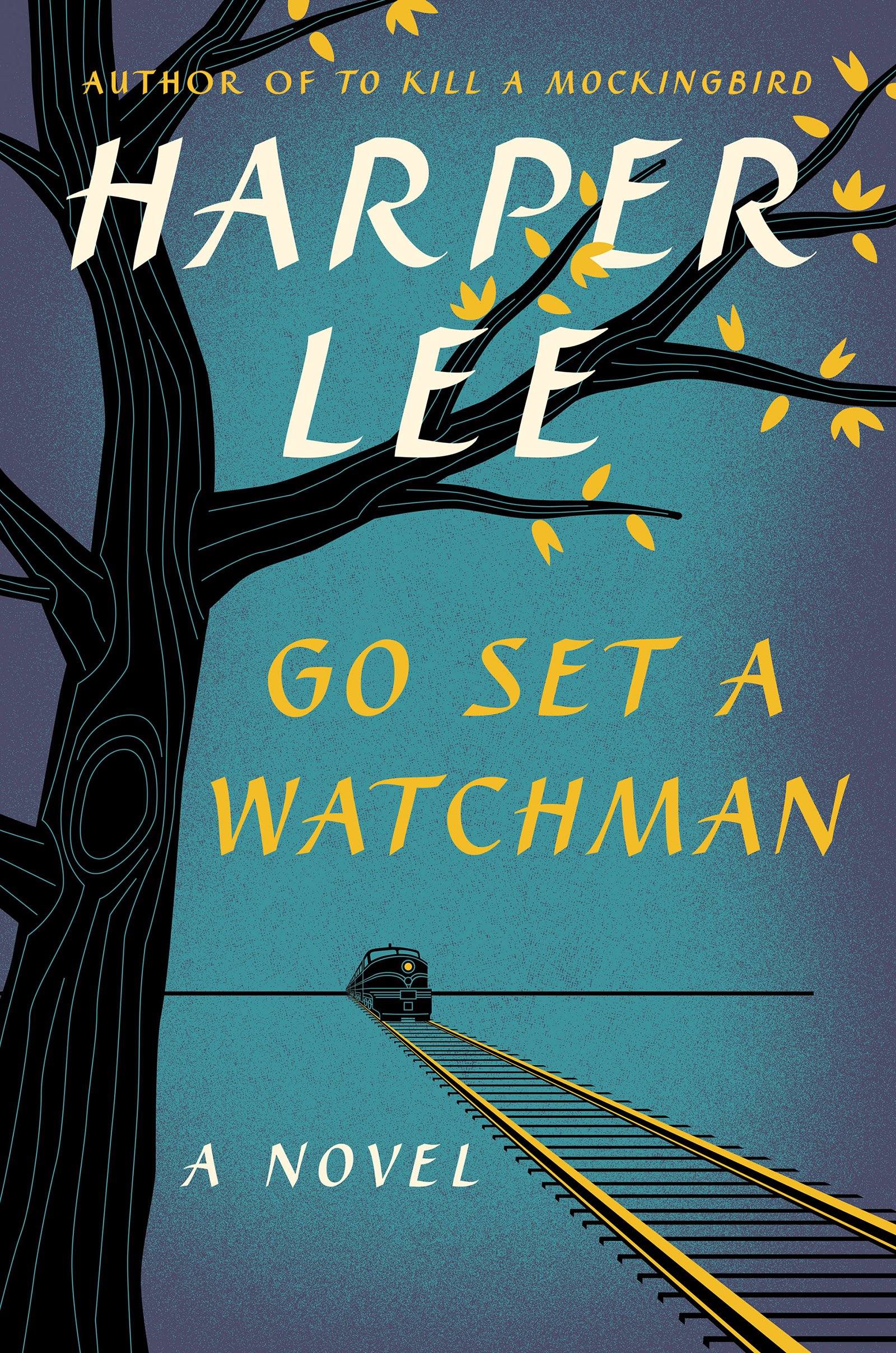
Go Set a Watchman | by: Harper Lee

I always thought it was kind of weird that Harper Lee had only written one book, but, when the only book you've ever written happens to be To Kill a Mockingbird, I guess you don't really need to write another one to be content with your writing accomplishments. Or financially stable. And after all this time has passed since the publication of To Kill a Mockingbird, most wouldn't have expected a new Harper Lee book, let alone a sequel to her beloved classic.
 
But then it was announced that Go Set a Watchman was to be published - I can even tell you what I was doing the day I heard - and the literary world exploded with both happiness and confusion. There were a lot of questions being asked about whether or not Harper Lee truly wanted this book published, and I realize many are still too suspicious to go near the new book at this point, but there was an official investigation which ultimately seemed to demonstrate that Harper Lee wasn't being taken advantage of
 
That situation aside, expectations for this book were generally set quite high. Personally, the only expectation I had for Go Set a Watchman was that it'd simply be good - I didn't need it to necessarily match To Kill a Mockingbird's greatness. Based on reviews I'd read, it didn't seem like people were putting it in the same league as To Kill a Mockingbird, and that made me perhaps even more curious to see what it's like. And then of course, I heard about Atticus...
 
It's only natural that we'd be heartbroken to hear that Scout has come back to Maycomb County to find out that her father is racist. But for those who resent Harper Lee for destroying our vision of a perfect human being who defends human rights despite the odds... Well, what are you going to do when people surprise you like this in the real world? Just say "I'm not going to deal with it" and turn away? And that's really the point of this book - to show us that people will oftentimes never be perfect, that we shouldn't idolize, and that we should come to our own conclusions about who's right and what's right, even when we disagree with our friends. Furthermore, no matter who's right and who's wrong, we all have to live with one another as we fight for what we believe. How can we hold our own against Atticus if we can't bear the unfortunate truth about him? The themes of this book are just as relevant in today's world as those of To Kill a Mockingbird.
 
In short, I think Go Set a Watchman is brilliant. Atticus' future is everything we didn't want for him, but I don't think there could have been a better sequel to follow up a novel about doing what's right. Scout is just as interesting and relatable as she was as a tomboy in her childhood, and while it's so easy to be disappointed in Atticus, it's just as easy to be proud of her. Rather than feel the need to mimic Atticus' morals as it seems she's always done, she has opinions and feelings of her own.
 
I think every girl who's more liberal than her mother can see herself in Scout's quarrels with Aunt Alexandra, and she has to realize that Alexandra is a human too, much like her realization about Atticus. And even though these are all very serious concepts and undertones, Go Set a Watchman is written in the same funny way as To Kill a Mockingbird. Harper Lee's style will always feel sort of home-y to me with the perfect combination of feelings that can be extracted, and that's ultimately what allowed me to plow through this book so damn fast. And of course, it was quite intriguing to see what other characters from To Kill a Mockingbird ended up doing with their lives, like Dill and Jem, and we are treated to more childhood flashbacks. Unfortunately nothing is included about the Radleys, who were always of high interest to me... but I really cannot complain about this book.
 
I realize that there are quite a few people who won't agree with me about Go Set a Watchman, but I don't care. Harper Lee should be just as proud as this novel as she should be of To Kill a Mockingbird. I truly loved this book, and I dare to deem it the perfect sequel. I even shed a tear at the end.

Wednesday, July 22, 2015

Throne of Glass | by: Sarah J. Maas

Throne of Glass seems to be one of the most-loved fantasy series in YA right now and I had definitely been feeling the hype. The last book I read with a ton of hype was Laini Taylor's Daughter of Smoke and Bone, and it didn't sit well with me overall, and I was afraid of Throne of Glass being a similar disappointment. Fortunately, it wasn't.
 
The premise itself is pretty deep. An assassin by the name of Celaena Sardothien has been enslaved by the Kingdom of Adarlan after finally being caught, and she has been kept in absolutely wretched conditions. But now she has the chance to win freedom through a competition, the only problem being that she would have to work for the King of Adarlan if she won, the very person responsible for all her traumas. As if that situation wasn't emotionally-compromising enough, it's becoming apparent that someone in the glass castle is using magic for brutal murder. Oh, and there's a love triangle.
 
So, there's a lot of drama to absorb in this one, but it's all quite epic. The idea of an Otherworld and the people and creatures who roam between dimensions reminds me a bit of Prophecy of the Sisters by Michelle Zink, but I think the magic has a lot more potential in this series. To be honest, I thought the mystery of who could possibly be causing the murders and for what purpose was relatively easy to figure out, but the lack of a major twist in that department doesn't make this book less intriguing. I found the characters far too interesting to ever be bored.
 
Our leading lady Celaena is different than what I generally expect from badass female protagonists. While she is undoubtedly tough and lets everyone know it (and possesses the skills to prove herself), she still has a feminine side that shines through. She may be able to kill even the most-skilled of those around her within minutes, but she still wants to wear dresses and attend balls. She still has a puppy. Her inability to remain confined to one stereotype is what I like most about her.

Even the love triangle flows better than in most novels. Chaol and Dorian are actually both contenders, much like Gale and Peeta in much of the Hunger Games books. Far too often, a second love interest is only thrown into the mix for the sole purpose of shaking things - he/she scarcely ever seems to be a real contender. But both Chaol and Dorian get plenty of time with Celaena and both are so different that it's easy to appreciate them individually. I'm honestly not very sure how this will end up working, but I certainly look forward to finding out.

Plus, it's obvious that Celaena is going to be part of something even bigger than she ever imagined, and I think the series will be even more epic because of it. Throne of Glass was a great series-starter - Sarah J. Maas definitely has me hooked - and I'm very optimistic about what the rest of the series will be like.

Friday, June 26, 2015

Redeemed | by: P.C. Cast and Kristin Cast

*This review likely contains spoilers for those who have not read the first eleven House of Night books. You've been warned.

Despite the fact that everyone seems to hate the House of Night series (I will never understand why people who hate a series continue to read and bash the books, but whatever), I LOVED these books. Go on, judge me; I don't care. The first three weren't the best, but from the fourth book on, I was really impressed. Very few series have been this fun to read. Redeemed is the twelfth and final book, and I must say I'm sad that Zoey Redbird's story has reached its end.  However, I found that Redeemed was quite satisfying. I flew right through it.

The end of the previous novel, Revealed, was a bit crazy, so right away it's apparent that Zoey really has to get her shit together before Neferet and Darkness take over the world. In order to restore balance, she must also be balanced, and she and her friends are running out of time. Once again the Cast women write through multiple narrations to tell the story, so Zoey's resolution isn't the only one to look forward to: Kalona and Aurox/Heath notably take the spotlight at times, and I must admit that the twists revolving around these two characters truly surprised me and had me gasping/OMG-ing. (Anyone catch the 'true love' thing at the end? Anybody?) We also get an interesting new relationship.

Even aside from all this, my favorite aspects of this series are found full force. The characters are humorous and continue their growth quite smoothly, and of course, the magick. I have always loved the spellcasting of the House of Night and how it relies on the elements and circle-casting; it's so interesting and fun! Granted Nyx's vampyres tend to get in on most of the action in this department, but it always made me happy to see the humans get involved in their own way, be it through Aphrodite's visions, Grandma Redbird's smudging, or the nuns' prayers. The House of Night series has always seemed to encourage spiritual unity, and it's quite prevalent in Redeemed.

The afterward/epilogue brings a sense of finality to a series full of chaos, and I thought it was lovely to check in on the Nerd Herd as adults in action and see how they made a difference among vampyre and human communities. I realize that a lot of people hated on this series so hard because the characters are so silly... but what does it matter? It's amusing, and furthermore, there are a lot of silly people in the world. As the Cast women enforce, it's about the purity of one's intentions and whether or not they intend to do good in the world. The House of Night series preaches love and forgiveness, hence the title of the last book being Redeemed, and I'll always hold it in high regard. This long series finished up well.

"Merry meet, merry part, and merry meet again."