Tuesday, May 26, 2015

The Human Contradiction | Delain

In the symphonic metal realm of the Internet, Delain has been gaining recognition, especially with the release of their latest album, The Human Contradiction. It was a bit easier for Delain to make their name known in the world of symphonic metal as it was started by Martijn Westerholt, brother of Robert of Westerholt and initial keyboardist of Within Temptation, but they've only been growing in popularity as they've been releasing albums. Lead vocalist Charlotte Wessels has a unique voice since she's had both classical and jazz training, and while it took her style a while to grow on me, the fact of the matter is that Delain is making music that's catchy enough and heavy enough to demand attention almost instantly nonetheless. The Human Contradiction is a lovely symphonic metal album because of these elements.
 
"Here Come the Vultures" kicks the album off with a horror feel reminiscent of songs like "The Howling" by Within Temptation and "Cloud Nine" by Evanescence. It begins softly with chimes and piano as Wessels sings along to a creepy melody, but then heavy and infectious guitar riffs come in at the end of her powerful opening verse: "I just want to see you stare / As I lay my soul bare for you / To crush upon with heavy feet / I'm in it for the beat." This is the longest song on the album, clocking in at about six minutes, and even though the overall structure is a bit repetitive, more elements are added to make the song more interesting. The choir and strings become more and more prominent as the track continues, and there are moments where I definitely see the resemblance between this band and Within Temptation. The final section of the bridge is a thrashing jam session that is a perfect blend of guitars and strings, and I don't think I could be happier with this opener.
 
"Army of Dolls" also stands out as one of my favorites. I fell in love with it right away when I heard it during Delain's setlist as they opened for Nightwish last month, and it's actually what motivated me to look up more of Delain's music. It's an epic track about body image and the struggle to accept oneself amid society's impossible standards... It actually surprises me that there aren't more songs about this; I'm very happy Wessels decided to tackle the subject. The chorus is a fantastic blend of guitars and keyboards and it's easy to get it caught in your head as Wessels repeats "Do you want me...?" The middle eight seems to slow things down before all hell breaks loose (sort of like in "Here Come the Vultures," yet still distinctive). I love this song.
 
The first single, "Stardust," primarily stands out because of its catchy chorus and pretty lyrics: "Bring me to life / Bring me to starlight / Bring me the sun and moon / Release the stars tonight." However, the second verse helps the song chug along since guitars are added and it doesn't rely quite so heavily on vocals alone. The piano part of the pre-chorus almost seems to imitate a heartbeat and continues as one of the chorus' layers, another of the song's great elements. Even though it's one of the poppier songs from the album the middle eight certainly still rocks and adds a soothing choral layer. I wasn't initially crazy about "Stardust," but it definitely grew on me once I was able to truly appreciate the standout chorus.
 
"Lullaby" is also a pretty solid track with a mystifying use of keyboards. It's one of the more repetitive songs, but it's quite fun and energized. The way Wessels vocalizes in the middle eight reminds me a bit of Sharon den Adel of Within Temptation, and I also hear this resemblance in the beautiful chorus of "The Tragedy of the Commons." Death metal vocalist Alissa White-Gluz of The Agonist and Arch Enemy is featured in the bridge, a dark and interesting contrast to Wessel's lighter voice. "The Tragedy of the Commons" has a perfect combination of heaviness and lightness, thus making it one of my favorites and a relatively memorable album-closer.

This album features a couple of other high-profile guest vocalists. Marco Hietala of Nightwish sings on "Your Body is a Battleground" and "Sing to Me." "Your Body is a Battleground" is definitely the heaviest of the two with its intense, war-like feel, and "Sing to Me" is more melodic. Neither are favorites of mine but I prefer "Sing to Me" as it's more relatable and the string line during the middle eight is quite pretty.

I was more excited for "Tell Me, Mechanist," as it features the ex-Orphanage vocalist George Oosthoek... We all know how much I love George. And while he sounds great on this track, it's a really good song nonetheless. It begins with just Wessels and the piano: "Tell me, Mechanist, is it true? / Does none of it bother you?" But heavy riffs reminiscent of Amaranthe's music comes in and it sounds fantastic. It's definitely a highlight.

In short, I was pleased with The Human Contradiction. I actually enjoyed it more than I anticipated. Even though there are a couple of mediocre tracks and I just couldn't get into "My Masquerade," I really like what Delain is doing here. Plus, on the two-disc edition we get the piano ballad "Scarlet," which is undoubtedly one of their best pieces - it's so subtle but so epic! Their blend of strings and guitars is really well-balanced and they display some wonderful moments in terms of songwriting. While I can't quite rank Delain among symphonic metal legends Within Temptation, Nightwish, and Epica, I must say that they are leagues ahead of quite a few of the bands within this subgenre. I'm impressed.

Tuesday, May 19, 2015

Top Ten Tuesday: Top Ten Classics I Can't Believe I Haven't Read Yet

Top Ten Tuesday is a fantastic bookish meme from The Broke and the Bookish. Every week book bloggers are asked to make lists based on the chosen topic, but this week is a free-for-all. Today I'm going to be talking about classics and the good 'ole TBR:

Top Ten Classics I Can't Believe I Haven't Read Yet
 
1
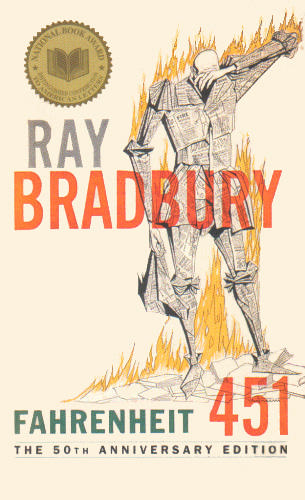
Fahrenheit 451 by Ray Bradbury
 
 
2
The Phantom of the Opera by Gaston Leroux
 
 
3
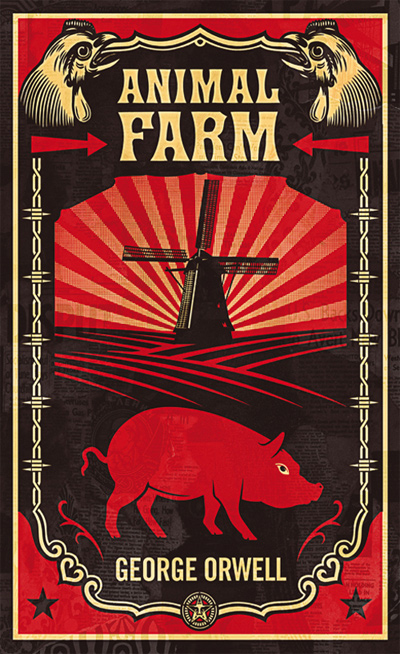
Animal Farm by George Orwell
 
 
4
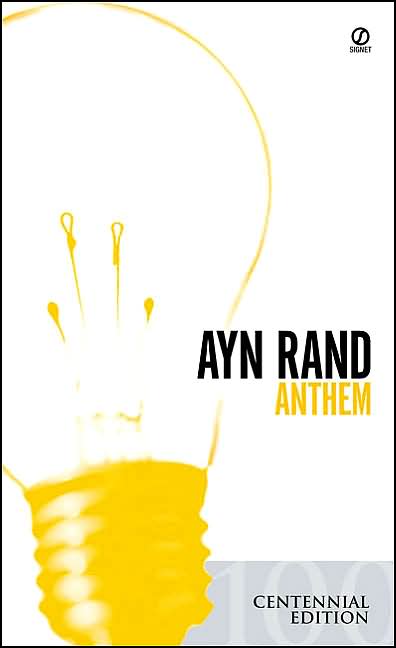
Anthem Ayn Rand
 
 
5
Rebecca by Daphne du Maurier
 
 
6
The Hidden Force by Louis Couperus
*For those of you wondering "What even is this?": It's more prominent in Dutch literature. My favorite album by Within Temptation, The Silent Force, was written about this book, and that's why I want to read it.


7
The Last of the Mohicans by James Fenimore Cooper
 
 
8
Mysteries of Udolpho by Ann Radcliffe
 
 
9
Emily Bronte’s Poetry
 
 
10
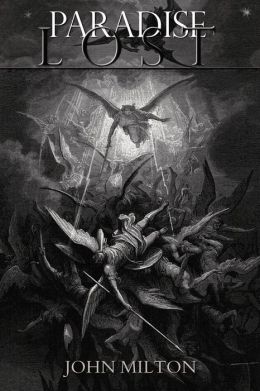
Paradise Lost by John Milton


Feel free to leave your Top Ten Tuesday link. Have a great day!

Friday, May 15, 2015

Ultraviolence | Lana Del Rey

It's certainly no secret that Lana Del Rey's music sometimes needs time to grow on me... Remember that time I reviewed her debut Born to Die somewhat negatively and eventually wrote a note on it saying that I mostly changed my mind and ended up loving it? I like to avoid stuff like that and give albums their fair chance. That's why it took me so long before I listened to her latest release, Ultraviolence.

Even though this new album is a departure from the odd yet wonderful mesh of indie and R&B influences of Born to Die and the delicate, score-like sounds of Paradise, Lana has once again crafted an album that's solid, relaxing, and perfect for summer. Altogether, it's certainly very Lana despite any differences in sound. Ultraviolence took even longer than Born to Die to grow on me, but finally, the time is right for me to appreciate this new direction.

Ultraviolence is a strange combination of dark and beachy sounds, and it works... In a way, it has more of an alternative vibe as it's very guitar-led. However, the guitars are like a lazy, hot summer day - the parts make me think of Pink Floyd's riffs in songs like "Breathe" and "Us and Them." This is especially noticeable in the single "Shades of Cool." It's very slow and dreamy, and there's even a bit of a guitar solo in there. Oddly enough this song had no effect on me whatsoever the first few times listening to it, but now I can't get enough. Despite being less ballad-like and having more of a kick to it (for lack of a better term), "Cruel World" has a similar feel. And of course, Lana's mellow alto voice molds into this relaxing, dark, yet summery flow perfectly.

The 'beachiness' of Ultraviolence comes full force in the singles "Brooklyn Baby" and "West Coast." Actually, "Brooklyn Baby" is one of the few songs that I loved instantly with the semi-staccato guitar line and general melody. Percussion really helps the song pick up at the start of the second verse, and Lana's lyrics certainly have their appeal: "Well my boyfriend's in a band / He plays guitar while I sing Lou Reed / I've got feathers in my hair / I get down to beat poetry." At that point I was basically in love. On the other hand, "West Coast" took absolutely forever to grow on me, but once it did... Well, it's still hard for me to keep away from it. Lana half sings, half narrates the verses in a way that might sound musically appealing at first, but once you see how it fits in line with that fantastic chorus, it makes perfect sense. Still, the chorus is the best part of the song as it takes the pace back down a bit and Lana sings in the most soothing way.

"Old Money" is the most stripped down, with the instruments primarily being the piano and some strings. This song is by far the easiest to fall in love with. It's beautiful and soft, and the vocal line is similar to the classic "A Time for Us" from Romeo and Juliet. Fans of her album Paradise will eat this song up like candy. The lyrics are especially poetic: "My father's love was always strong / My mother's glamour lives on and on..." "Old Money" always makes me think of my favorite movie American Beauty for some reason... It feels somewhat similar to the softer moments of Thomas Newman's gorgeous score.

"Pretty When You Cry" and "Money Power Glory" are other slower-paced song that stand out for both their simplicity and melancholy feel. The guitar part of "Pretty When You Cry" reminds me of "Hotel California" by The Eagles, except this is much darker (despite still being an ideal summertime track), and while "Money Power Glory" certainly has some of the more 'classic' ingredients found on Ultraviolence (chilled guitars, simple piano chords, etc.) it's more atmospheric. In fact, at the very beginning of that one I was reminded a bit of the alt/synthpop band Of Verona.

The title track, "Sad Girl," and "Fucked My Way to the Top" are the only ones I don't care for, at least on the standard, and of the three deluxe bonus tracks, the ever-melancholy "Black Beauty" was the only one to resonate with me. Overall, Ultraviolence left me with very positive vibes. Even though it's lighter and easy to listen to, it's still relatively dark, like all of Lana's work. I'm really happy I gave it a chance to grow on me and I definitely encourage everyone to give it a try this summer. After all, that seems to be Lana's prime season, and Ultraviolence is no exception.

Thursday, May 7, 2015

Favorite Voices: Part 2

Years ago I compiled a list of my favorite vocalists of all time. That list is still true today - I love all of those singers just as much as I did back then. (However... I must warn anyone who reads it: It was posted during my first couple years of blogging, which means the layout isn't quite right and my writing is super simplistic.) Somewhat recently, I've developed some love for other voices, and I thought now would be a good time to share them.

Floor Jansen
Member of: After Forever, ReVamp, Nightwish

It took me a while to discover the perfection that is Queen Floor. Once she started filling in for Nightwish I listened to her on "Ghost Love Score," and by the last note I became a fan for life. She has mastered a combination of vocal styles one could only imagine: She can hit notes higher than the stratosphere, she can sing classically with grace and power, she can sing metal with a grungy sound, she can growl better than most of the grunters in the metal scene. And she can switch between styles with seconds to spare. This woman is power. When watching videos of Nightwish's "The Greatest Show on Earth" live I thought an extra lion was added between the sections "Life" and "The Toolmaker." But it wasn't a lion. It was Floor.
George Oothsoek
Member of: Orphanage

I actually don't know Oothsoek from his band Orphanage. Instead, I know him from Within Temptation's impressive list of concert DVDs, all of which feature him as a guest. On the Mother Earth Tour DVD,  he performs "Deep Within," on The Silent Force and Let Us Burn: Elements and Hydra Live in Concert he performs "Candles," and on Black Symphony he performs "The Other Half (Of Me)." On Black Symphony, Within Temptation's lead vocalist Sharon den Adel calls him "the best grunter in the Netherlands," and I completely agree. Many grunters struggle with consistence live as they have to really do it just right in order to sound good and not destroy their voices, but George is spot-on.
Dolores O’Riordan
Member of: The Cranberries
*Also has a solo career

If you told me eight years ago that I'd feature Dolores O'Riordan on a list of my favorite vocalists, I would have said you were crazy. But here we are. O'Riordan's voice is characterized by a thick Irish accent and the way her voice cracks a bit at the end of phrases. It's not what a lot of people are used to, but her sound is so unique it's impossible not to grow fond of it. She belts so strongly and thrusts a lot of emotion in her voice, making her sound utterly powerful at times but utterly broken at other times.
Dido Armstrong

Even though I've always known of Dido and even owned one of her albums, my appreciation for her has truly grown over the past half year. Her alto voice is one of the smoothest I've ever heard, but I suppose hearing it always makes me nostalgic since I remember hearing "Thank You" on the radio 24/7 as a child (I think my mother was completely sick of the song at the time, but even she can't resist Dido now). To be honest, I only really like some select songs from her, but her voice is so pretty that I'll always be interested in her career.

Chester Bennington
Member of: Linkin Park

A unique sound, a unique range. Chester Bennington's tenor voice is certainly recognizable even though much of the mainstream-listening general public doesn't know him by name and instead by the title "The Lead Singer of Linkin Park." His voice is higher-pitched than that of most men and has a remarkable clarity to it, but Bennington is also known for his harsh vocals. Rather than projecting low, monstrous growls and screams, Bennington screams about as high as he can sing. In addition to Linkin Park's fusion of genres that lessen some of their rock music's aggresiveness a times, Bennington's voice is also a factor that plays into the band's widespread popularity.
Elena Tonra
Member of: Daughter


Daughter is one of those bands that are the epitome of the laid-back indie sound, much like Radical Face but perhaps more melancholy. However, the effect wouldn't be the same without Elena Tonra's alto vocals. Her voice has a smoothness remnicient of Dido (though I'd definitely be able to distinguish the difference between the two in an a cappella match). She doesn't show off; she just goes with the music and allows her voice to mesh with subtle instruments, and hence, her voice is quite peaceful to listen to. 

Tuesday, April 28, 2015

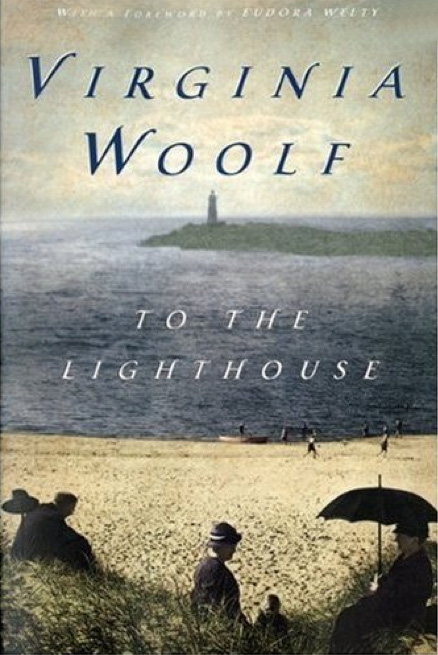
Classics: To the Lighthouse by Virginia Woolf

My first encounter with Virginia Woolf's work was in the form excerpts in a university textbook from A Room of One's Own. I decided quite quickly that this woman was worth my time, shelved The Waves as to-read on Goodreads, and became excited to discover that I'd have to read To the Lighthouse for a later class. I figured it would be good; I at least knew the writing would be lovely. But I really didn't know what to expect overall.
To the Lighthouse is a complicated novel. Woolf's stream-of-conscious style takes readers into the heads of several different characters without warning to help us understand their perspectives. Most notably, there is Mrs. Ramsay, a conservative mother deeply attached to her children who everyone seems to admire; her husband, a scholar obsessed over whether or not his work will remain relevant; James, their youngest child who loathes his father; and Lily, a painter who spends time with the family. Lily is so unlike Mrs. Ramsay as she has no plans to marry and struggles to understand Mrs. Ramsay's allure, and all the while, Mr. and Mrs. Ramsay's different parenting styles leave a remarkable impact on their children.
I will admit that I struggled with the stream-of-consciousness at first. It's not that I didn't know which character's head I was in; I thought the most difficult part was trying to figure out who was being thought of. It didn't take me too long to realize that this is part of what made To the Lighthouse special: I don't think Woolf would have been able to do what she set out to accomplish in a different style.
It's easy to feel when reading this book. There are so many moments of tension where no one is saying much but the characters are thinking a lot, and then there are other moments of utter sadness. I felt horrible for the children of this novel as Mr. Ramsay was a poisonous person to be around, and in turn, there were moments I felt horrible for Mr. Ramsay too. Every time I read a novel that deals with family relations, I wonder why it isn't a more common theme in books... It's so powerful. 
In addition to perspective, time is a key element in this story, and along with it, the inevitability that nothing and no one will last forever. It can be a difficult concept to grapple with, but I didn't find this theme depressing. A family far from perfect to begin with has to deal with one another, even if full of hatred or mixed emotions, and they have to deal with death. The same goes for their friends. Lily and Carmichael both have revelations sparked by this tumultuous and intriguing family, and I can't quite put my finger on it, but I could relate to Lily's emotional realizations at the end about Mrs. Ramsay. It was one of the moments that ripped at my heart.
But as I said before, To the Lighthouse didn't leave me depressed. Just in a strange sort of awe. I don't think I expected it to be quite so powerful and I don't think I expected to relate to it based on a short description I read of it... It's a really beautiful book. I loved it, and I'm definitely planning on reading some more of Woolf's work. 

Friday, April 17, 2015

Endless Forms Most Beautiful | Nightwish

It's finally here. Nightwish has released their very first studio album with Dutch legend Floor Jansen, Endless Forms Most Beautiful. Nightwish has had quite a variety of singers over the years, but fans have been especially excited for Jansen considering how versatile her voice is and how well she performed with them during their last round of touring when filling in for Anette Olzon. This is also the band's first album to feature Troy Donockley on pipes (or whatever exactly that instrument is) and backing vocals and Kai Hahto on drums. Expectations are high: Endless Forms Most Beautiful must be unique, heavy, and bombastic -  Tuomas Holopainen's genius must highlight the skills of new members and create something utterly ambitious.

Like with some of their older albums, I needed to listen to each song a few times before I truly can appreciate it, which is actually something both Jansen and bass guitarist/vocalist Marco Hietala suggested for this album specifically since the tracks are so thick, but there were certainly moments that stuck out right away. This album is just as heavy and beautiful as I expected... But Endless Forms Most Beautiful actually surpassed my high expectations in a few ways... Each song is so full of life, but the final track alone is enough to leave any listener utterly astounded.
 
"Shudder Before the Beautiful" kicks the album off with a softspoken narration by scientist Richard Dawkins for about seven seconds before all those expectations get thrown in listeners' ears all at once. The orchestration is thick and ambitious, and it's reminiscent of songs like "Dark Chest of Wonders," "The Poet and the Pendulum," and even a little bit of "Stargazers." The chorus is both deep and lighthearted as Floor Jansen essentially sings about the Romantic-era concept of the sublime - specifically the night sky and the universe in general, and how we are all humbled by the sight. The middle eight is filled with an epic choir and heavy riffs, and by the time the end has been reached, I felt rather refreshed as Floor and the band resolve and the orchestra sways. Nightwish makes some killer opening tracks, and "Shudder Before the Beautiful" is certainly one of them.

Even though we're only two tracks in, "Weak Fantasy" makes its mark as one of the heaviest songs. Once the strings and choir really get going, the overall sound is eerie. The verses and the beginning of the middle eight are different from other Nightwish material with its twangy acoustic guitar line, but once the full instrumentation comes in during the middle eight we're exposed to an incredibly catchy string line, and the chorus is a punch of adrenaline. I love this one.

Oppositely, the band shows their softer side with "Élan," which prominently features Donockley on his pipes to give it the folky feel Nightwish has always presented so well off and on throughout their discography. Jansen sings very softly in the verses, and as Jansen fans know, that's unusual for her, but she sounds great and her voice grows along with the song. The middle eight really helps the song escalate before the key change.

Along with "Weak Fantasy," "Yours in an Empty Hope" stands out as one of the heaviest tracks from the album. With guitar riffs that recall "Wish I Had An Angel" and dark atmosphere, both Jansen and Marco Hietala have room to show off. It will definitely please all the Floor fans dying to see how her versatility will be taken advantage of: Her vocals in the verses are rougher, and while Marco sings the melody in the chorus, she growls. One of the best parts is the middle eight, where Floor vocally just lets it all hang out - I'm not sure if it qualifies as a scream or a growl, but it's certainly a yell and its staccato rhythm will be a huge crowd pleaser when performed live.

The fifth song, "Our Decades in the Sun," is the only ballad on Endless Forms Most Beautiful. It took the longest song to grow on me, but ultimately I just love the vocal line and the way Floor handles it. As the song continues she generally gets louder and louder, and it's a song that takes its time. Something about it vaguely reminds me of "Meadows of Heaven."

"My Walden" displays Nightwish's fun folky side, kind of like with "I Want My Tears Back." Troy Donockley kicks off the song with his layered vocals quite nicely, and once again, Floor's vocals are really soft in the verses. I wasn't entirely sure how I felt about it at first, but anyone with a soft side for Nightwish's folk songs will be won over after that second chorus; it's like a hobbit explosion of happiness. The title track is also quite the jam session: Like "My Walden," it has more of a carefree feel. It demonstrates a love of life, a prominent theme on this album. And as much as I love the whole thing for its heavy riffs... Let's address the middle eight. The strings start with melody, then the band plays it back, and the they merge, building and building afterwards. Gradually, an epic choir part kicks in... It's awesome altogether.

Even though it isn't a bad song and I like the instrumentation a lot, "Edema Ruh" is my least favorite on the album. The vocal line is a bit corny to me. At first I got a similar mediocre vibe "Alpenglow," but I just had to listen to it a few times before it could grow on me. I like it much better now though it doesn't stand out as much as others; it reminds me quite a bit of Dark Passion Play, and I love that album to death. Both have a pretty instrumentation, with "Edema Ruh" adding delicate synth and "Alpenglow" being the more energetic of the two.

Nearing the end, "The Eyes of Sharbat Gula" is the tenth track and the only instrumental piece on Endless Forms Most Beautiful. Tuomas Holopainen has said it was written about the girl on a1980s National Geographic cover and war in general, and the darkness of the song certainly seems to capture the essence of the subject. It's subtle, like something one would hear in a film score, but it definitely builds and has some of Nightwish's folk influences incorporated. Donockley has backing vocals and the song also features a children's choir, and they make the song more haunting. This song stood out to me right away.

At last, we encounter "The Greatest Show on Earth," a piece that clocks in at about twenty-four minutes long... Bear with me as I try to explain my thoughts coherently, but this is the best Nightwish song ever created - and without a doubt one of the best songs of the current age - no questions asked. It's about evolution and goes through its stages, and overall, it matches up that concept of the sublime as Nightwish described in "Shudder Before the Beautiful" but they truly accomplish it with this song. It's either extremely loud or extremely soft... It's so beautiful it's almost terrifying.

The first part of this monstrous track, "Four Point Six," is led by a resonating piano part interrupted occasionally by orchestral explosions (listen to the song and you'll know what I mean... it's loud and it's wonderful) that help this section build itself up a bit, and because of the tricky rhythm, it comes in when you least expect it. Floor fans will be more than satisfied with this song overall, especially since she has operatic vocals in this first part and they're spot on (of course). Donockley's pipe eventually finds its way into this section as Richard Dawkins narrates, just before the second section, "Life," comes crashing in with the full band. I nearly came out of my seat when I heard the verse vocals - Floor's multi-layered part is scary in the best way possible and the lyrics are just pure genius: "The cosmic law of gravity pulled the newborns around a fire / A careless, cold infinity in every vast direction." She belts her way through the section's chorus, and even though Nightwish has made a ton of fun choruses, none of them make me quite as happy as this one. The powerful middle eight is characterized by an adrenaline-filled choral section. Furthermore, "Life" is just so damn heavy!

"Life" cuts off somewhat abruptly to make way for ethnic percussion, and then Nightwish manages to do something I least expected: They added animal noises. It sounds like I entered a jungle and I love it. A lion's roar cues the band back in for "The Toolmaker," in which Marco and Floor sing back and forth in the verses. Here, Floor gets to show off her rock/metal style vocals in the verses as she and Marco sing about humanity's impact on Earth: "Gave birth to fantasy / To idolatry / To self-destructive weaponry." In this section's middle eight, Nightwish managed to incorporate different phases of music from around the world to tell humanity's tale, from tribal-sounding drums, to Gregorian choirs, a Victorian harpsichord... Then the band explodes (with Floor's operatic vocals overlapping) when we least expect it (which brought a big grin to my face), and there are traces of a banjo and synths. I didn't even notice it the first few times I listened, but it's a great way of summing up humanity phonetically. Eventually the feel-good chorus of "The Toolmaker" leads us to a hair-raising, gorgeous post-chorus, overlapped with piano. Marco and Floor repeat the profound expression "We were here," and once again, we're left with soft, orchestral instrumentation.

The fourth section, "The Understanding" crescendos as Dawkins comes back to narrate before we get to the final section, "Sea-Worn Driftwood." This last section is so beautiful and subtle. It's mainly a bunch of ocean sounds and light orchestra as Dawkins finishes up the Charles Darwin quote that Endless Forms Most Beautiful got its name from. Sea creatures splash and communicate, and the song fades to its end. "The Greatest Show on Earth" is perfect.

To say I reacted strongly to this song would be an understatement. Instead of feeling the typical rush that follows discovering a new favorite song, I felt exhilarated, as though I just embarked upon some galactic adventure. For the first time, I had to ask myself, "How will I listen to other music after hearing this?" Every time I listen to it I smile like a dumbfounded idiot; it makes me so happy.
 
One thing I have recently realized is that even though Nightwish is without a doubt one of my favorite musical acts of all time with its intricate songs and beautiful lyrics, I've rarely ever related to their music personally. Endless Forms Most Beautiful changes that a little. Holopainen said in the twelfth album trailer: "Hopefully we can illustrate with this album – that science can even be something profoundly spiritual."  I firmly believe in the connection between science and religion, and the concept of science and life appears throughout this album. Hence, I connected to this album very deeply - especially with "Shudder Before the Beautiful" and "The Greatest Show on Earth."

In short, I loved this album very much. Everything we could have wanted is there: Floor uses all of her styles at some point or another (although some complain they still wanted more of her 'big' moments), we get to hear plenty of folk influences, the songwriting is genial as ever, and it's quite heavy. Nightwish has a wonderful catalogue of albums and Endless Forms Most Beautiful stands on a sky-high pedestal with the rest of my favorites.